The Data Existed. The Picture Didn't.
My Role
I wore multiple hats throughout this project — Design Strategist, Researcher, Technologist, and UX/UI Designer. The core team was just two people: a Director of Product Management and myself. Together, we were tasked with looking across PTC's entire product landscape to find new ways to bring value to enterprise customers who often used multiple PTC products, and therefore already had access to a variety of disconnected data, without a way to act on it.
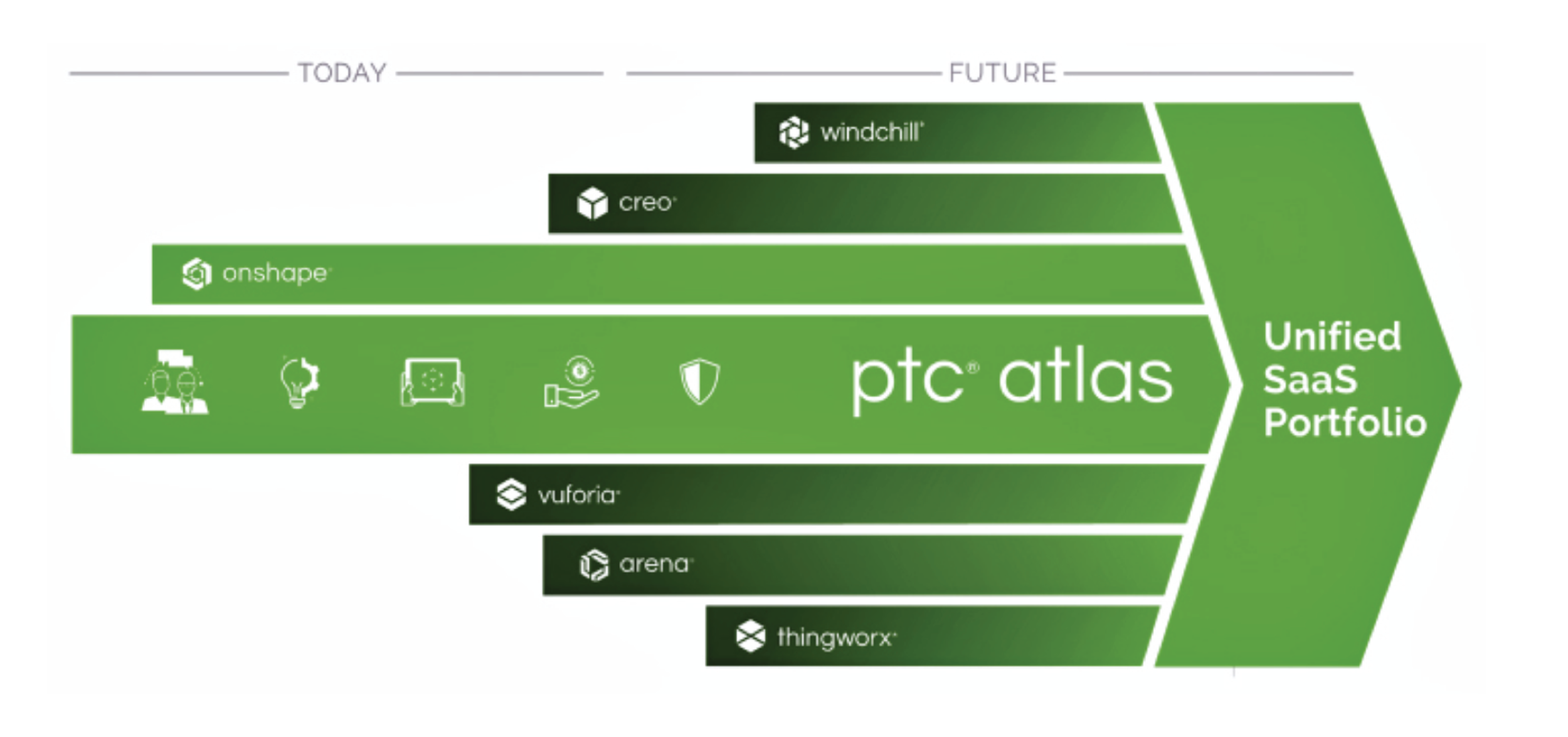

For enterprise manufacturers running multiple PTC products, the data needed to see patterns across an entire fleet of products already existed — 3D models, BOMs, manufacturing records, real-time IoT telemetry — but it lived in disconnected systems (PLM, CRM, IoT, FSM, etc ), so no one could see the whole picture.
This concept unifies that fragmented data into a single system of record, so product managers, field service, and engineering teams can act on fleet-level, real-time patterns instead of guessing which fixes matter for the next generation.
Concept Insight
Product managers didn't need more data feeds — they needed one legible view of the fleet, so they could stop guessing which fixes actually mattered for the next generation and start acting on evidence.
I conducted informational interviews with PTC clients and internal SMEs to identify the common thread underlying an abstract, cross-system problem. What I found: manufacturers were sitting on enormous amounts of "big data" — 3D models, BOMs, manufacturing tracking, IoT field telemetry — that wasn't being put to use. To keep the concept concrete rather than staying abstract across five unrelated systems, I anchored the research and design in one real product line: a global appliance OEM (Whirlpool), using washing machines as the running example throughout.
Storyboard to Prototype
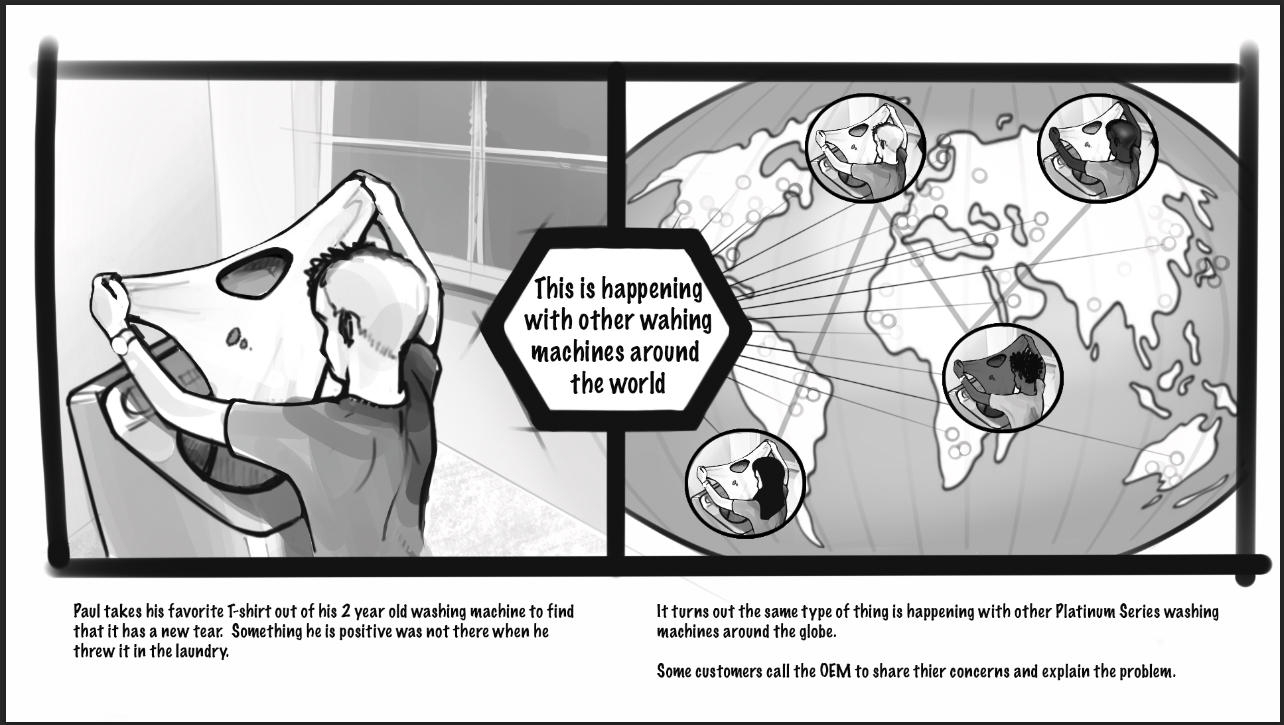
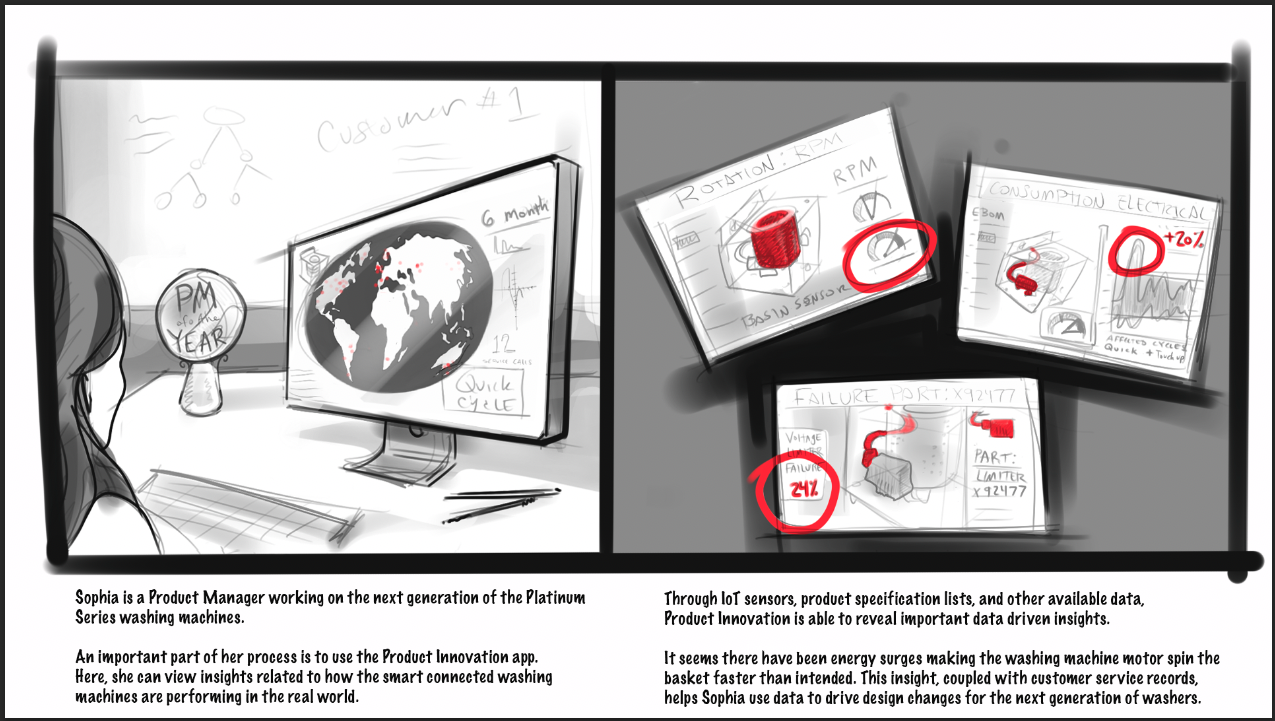
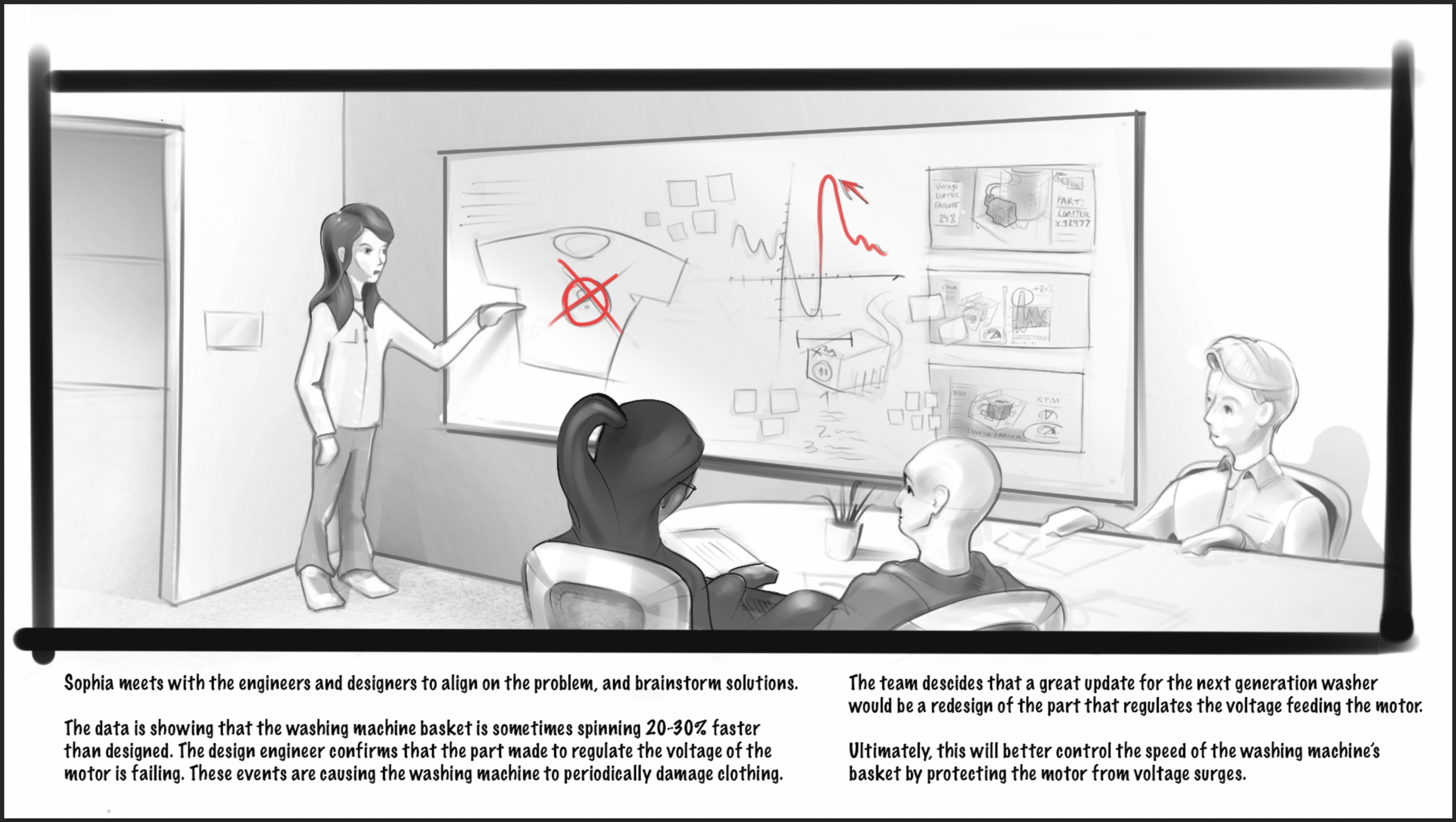
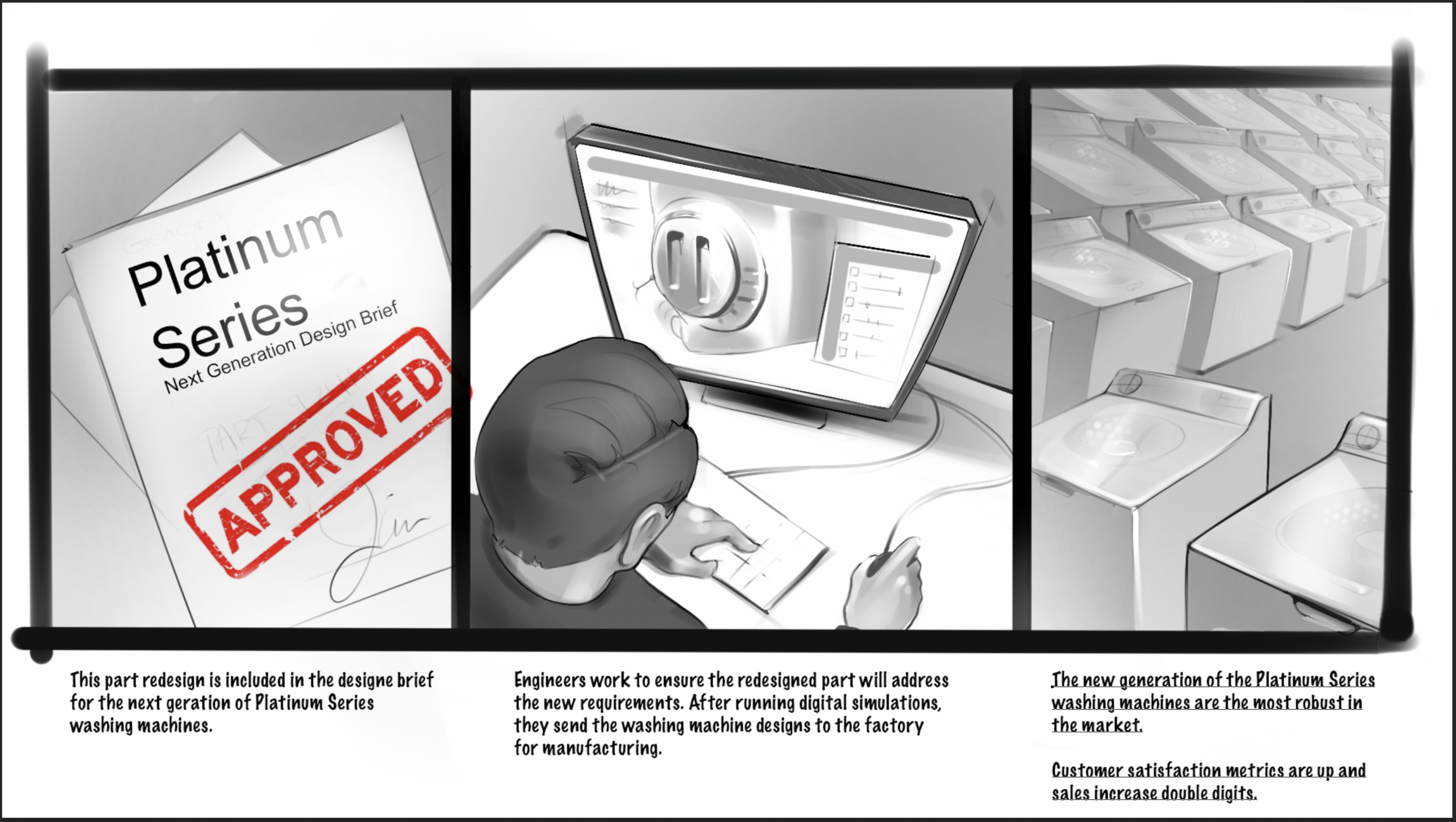
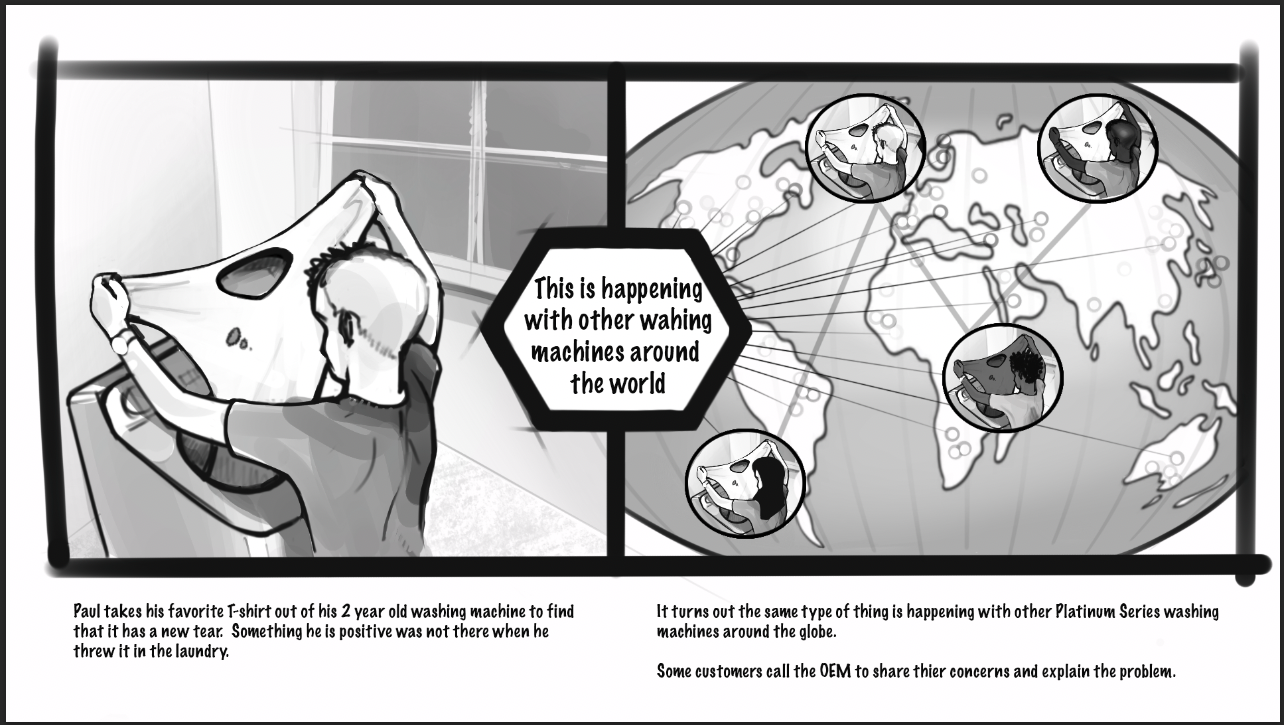
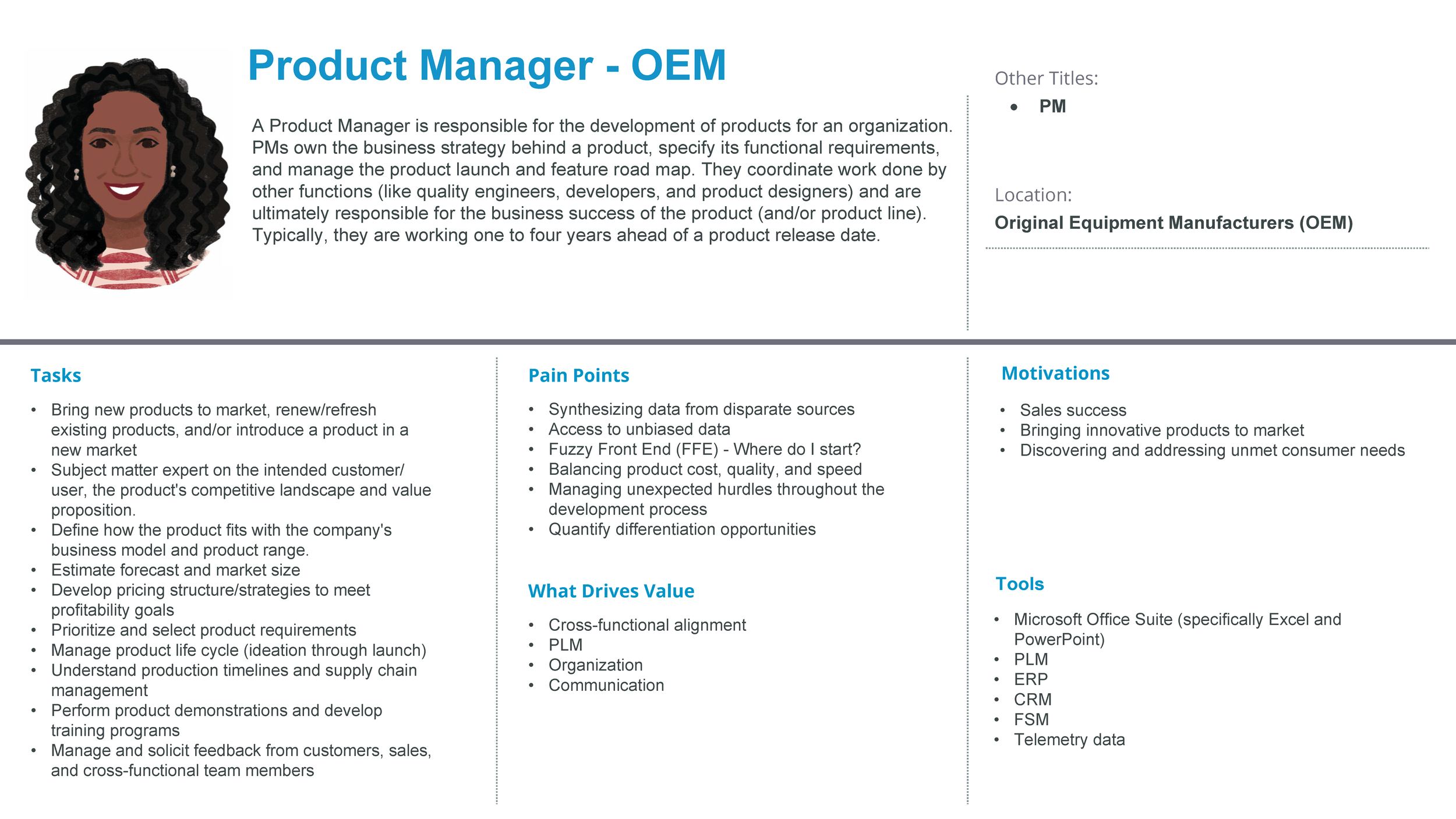
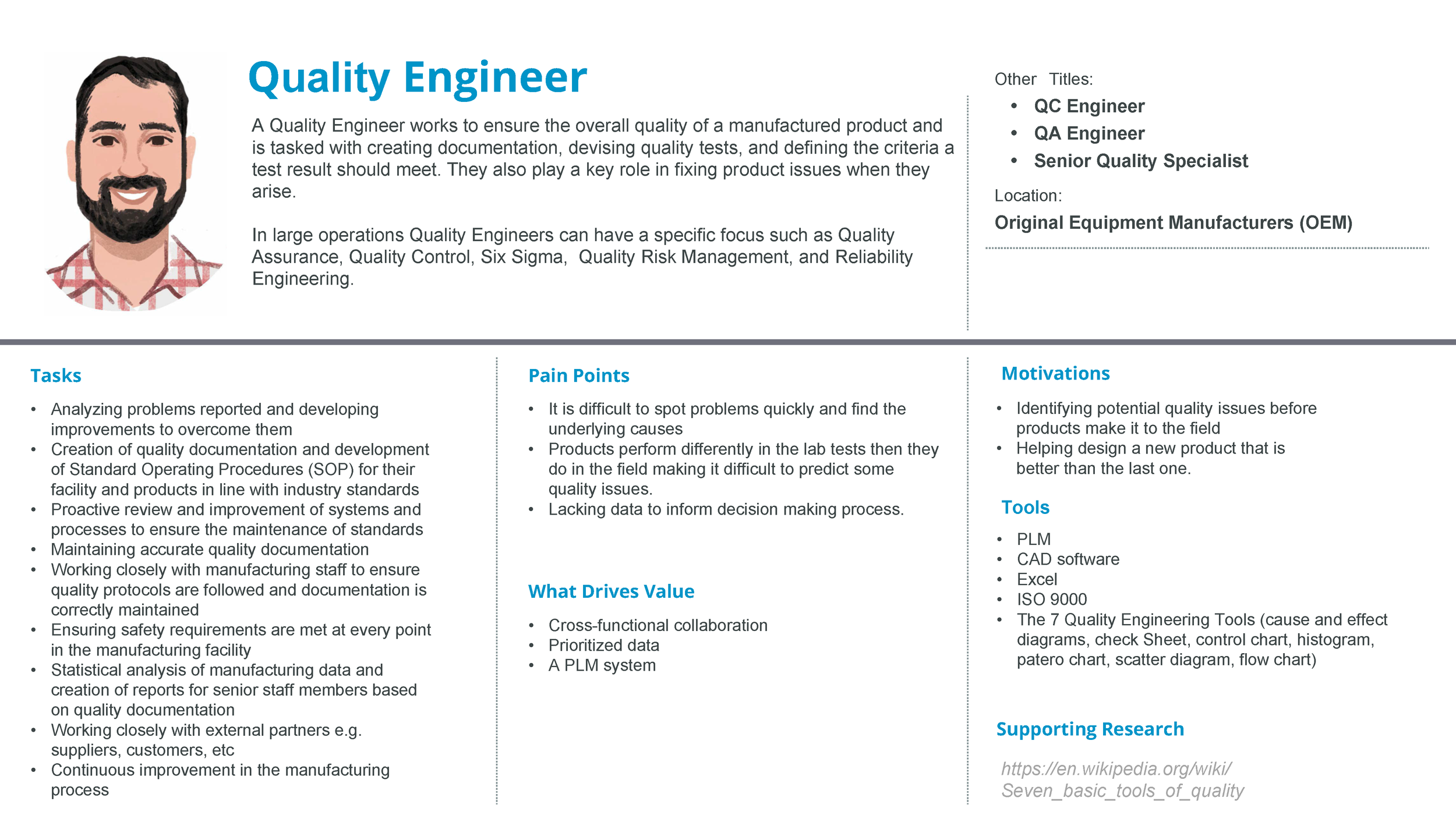
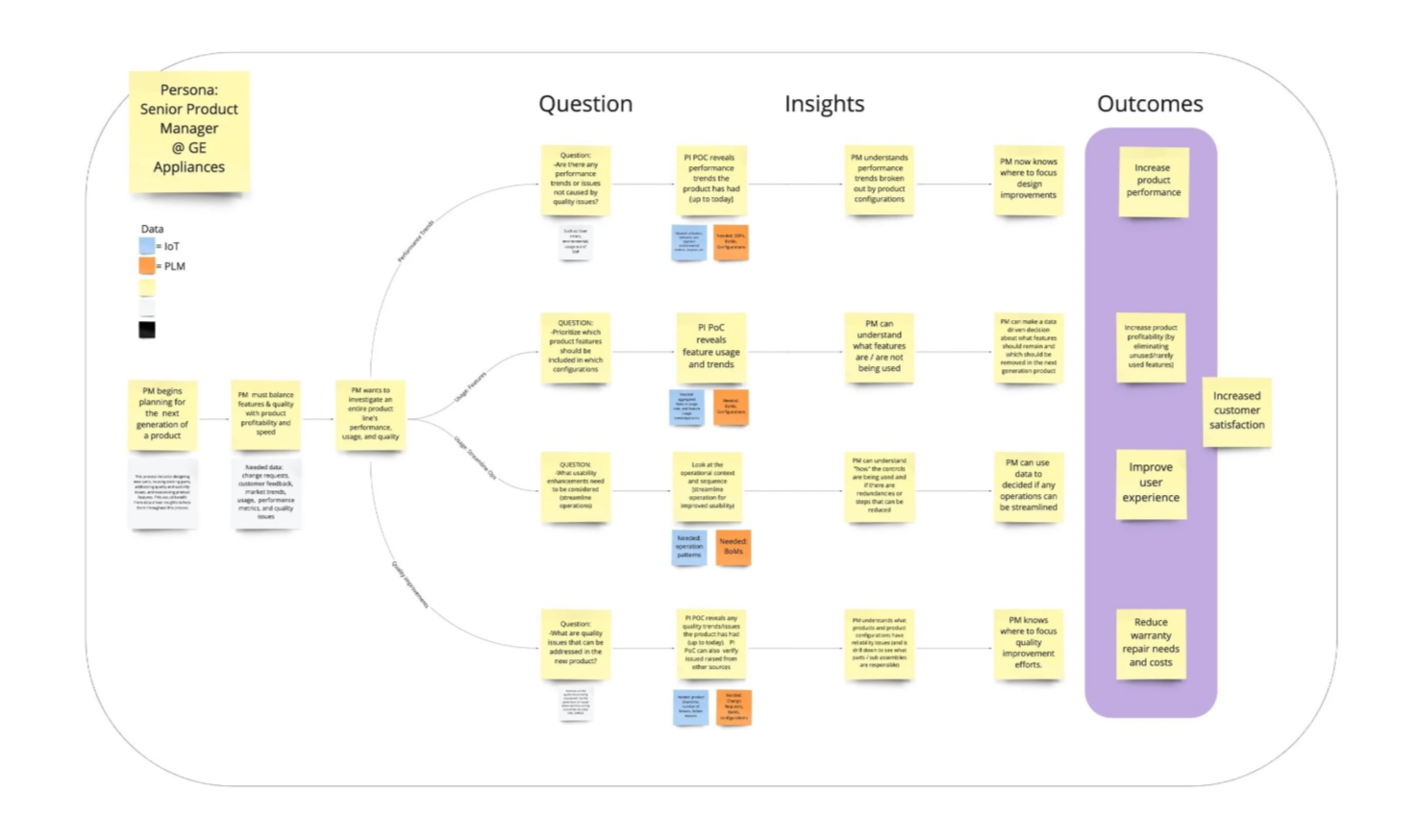
Wearing multiple hats — design strategist, researcher, technologist, and UX/UI designer — I built target personas and a UX hypothesis to ground the concept, then storyboarded the primary use case as a communication tool to align stakeholders and cross-functional teams before committing to a build.
Beyond stakeholder alignment, I ran structured qualitative sessions with actual target users against the storyboard and prototype, testing the concept directly against the personas it was designed for rather than relying on internal assumptions. I defined the UX strategy and designed the workflows unifying data from all five systems (PLM, ERP, CRM, IoT, FSM) into a single system of record, then built toward an interactive vision prototype to pressure-test the concept.
Multiple Personas
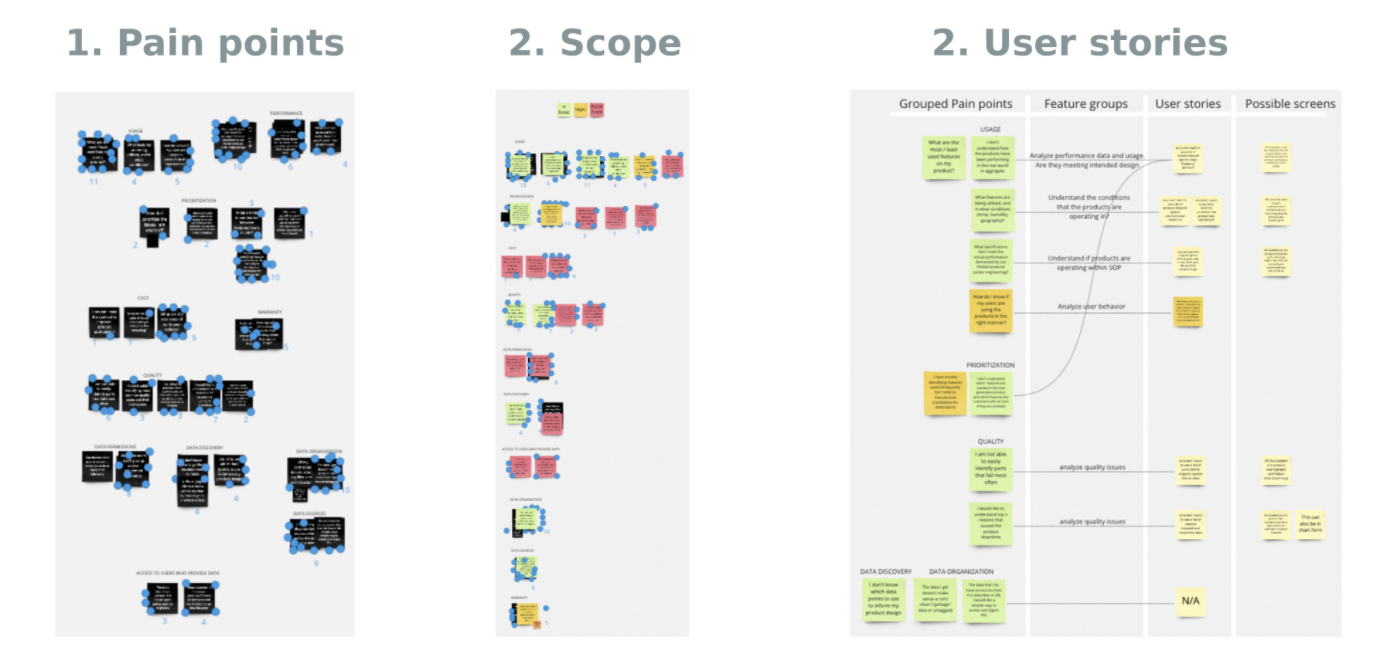
UX Hypothesis + User Stories
Ideation
Starting with lo-fidelity interactive prototypes — not a full build — I pressure-tested the concept with stakeholders while it was still cheap to change or kill, before committing to the 5-month engineering investment that became the MVP.
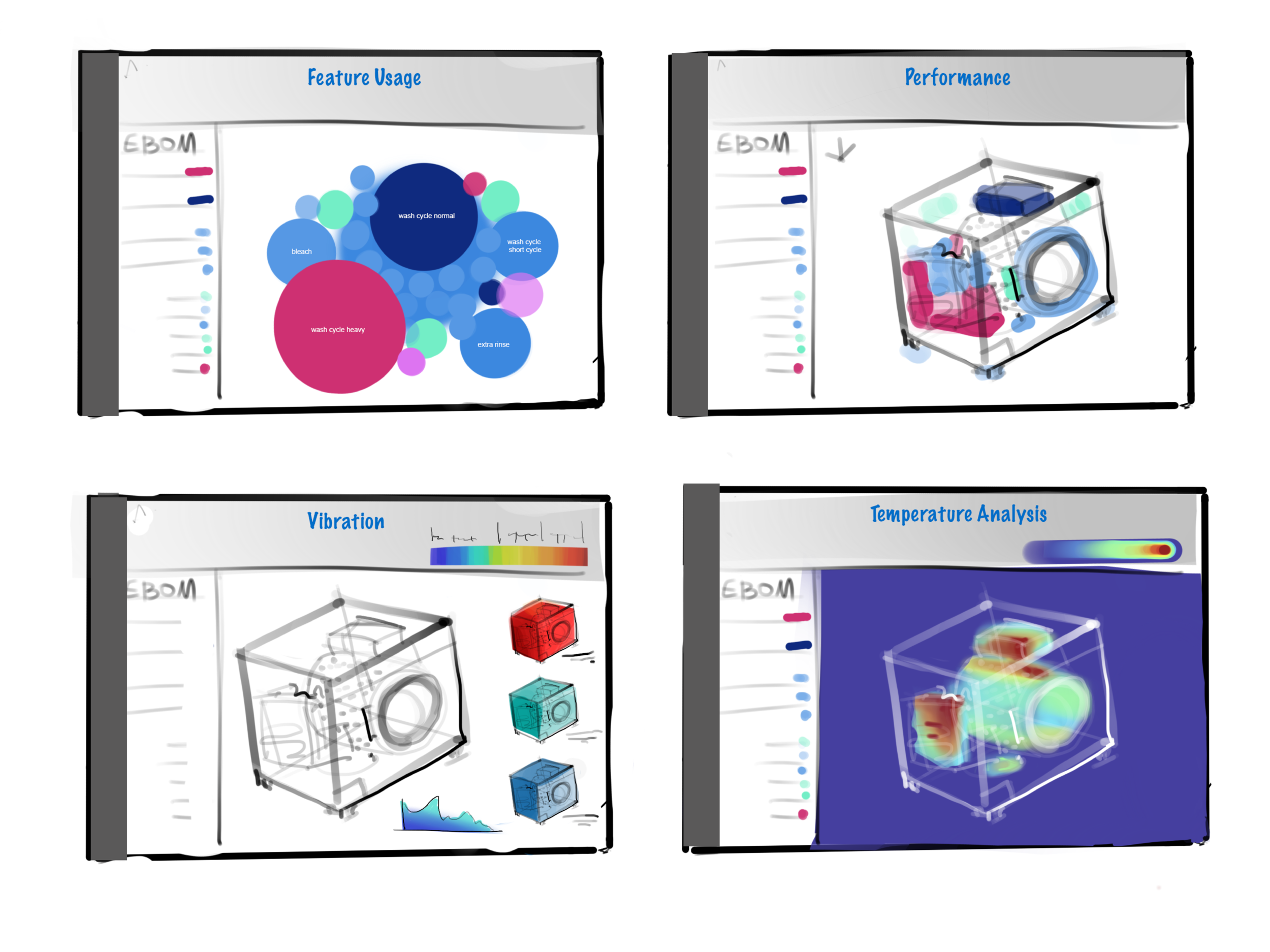
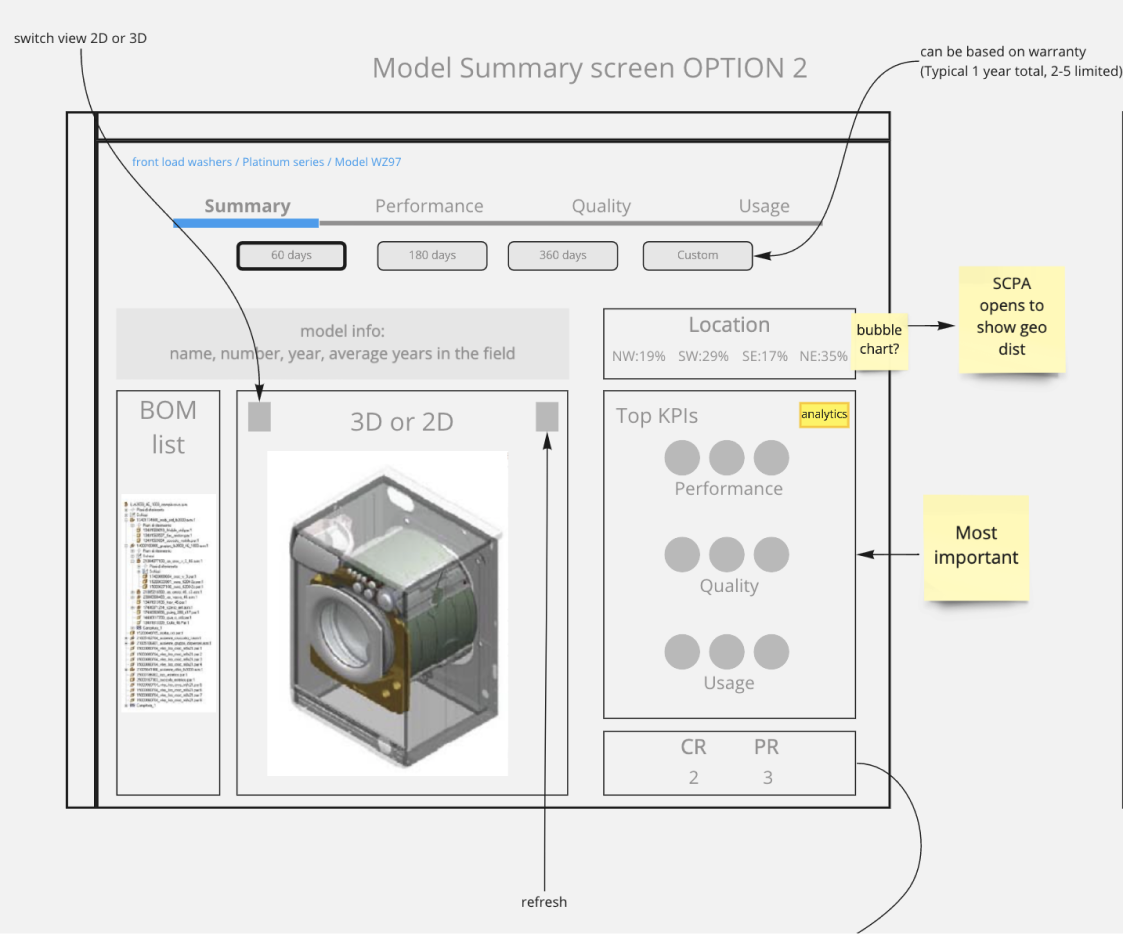
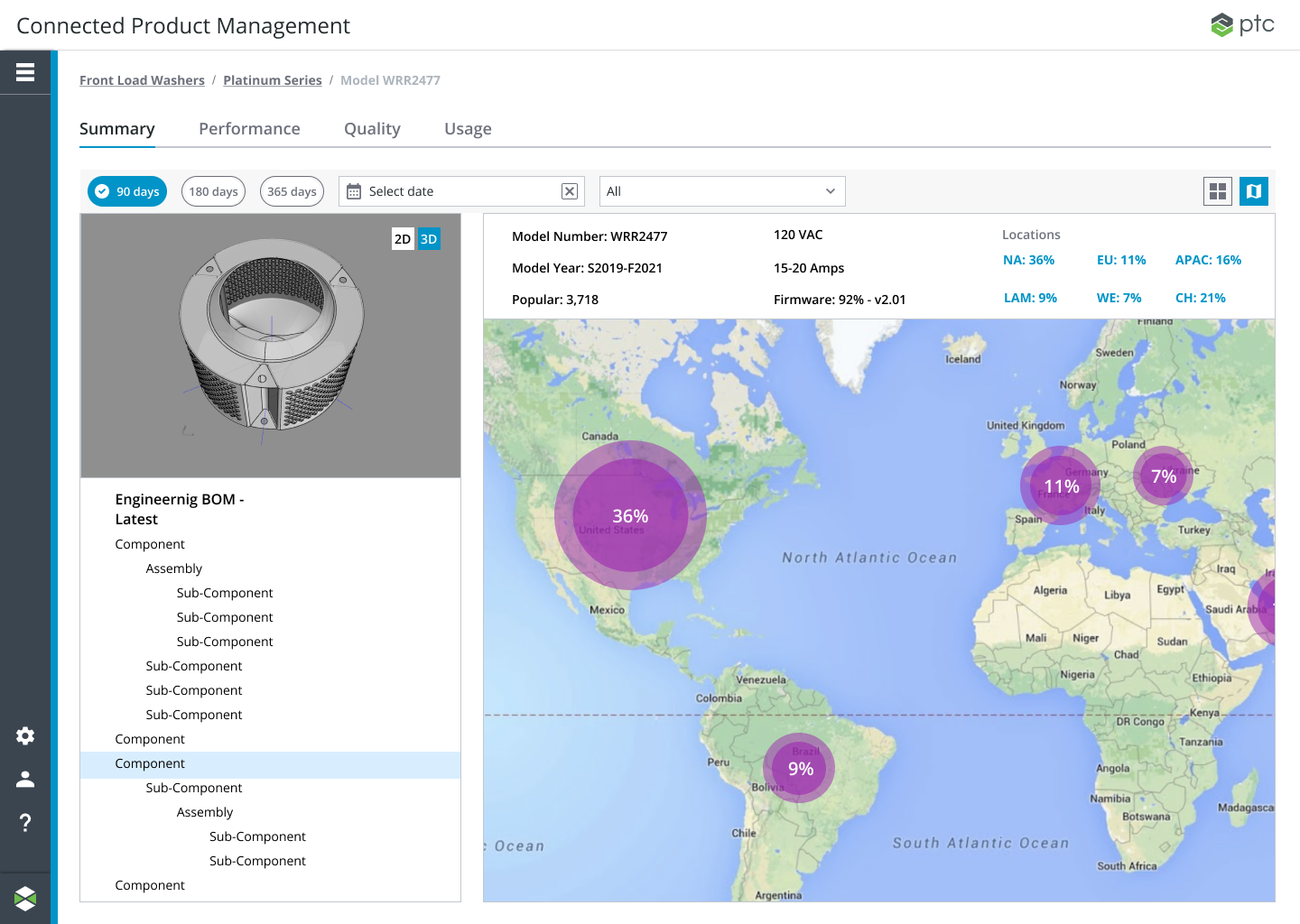
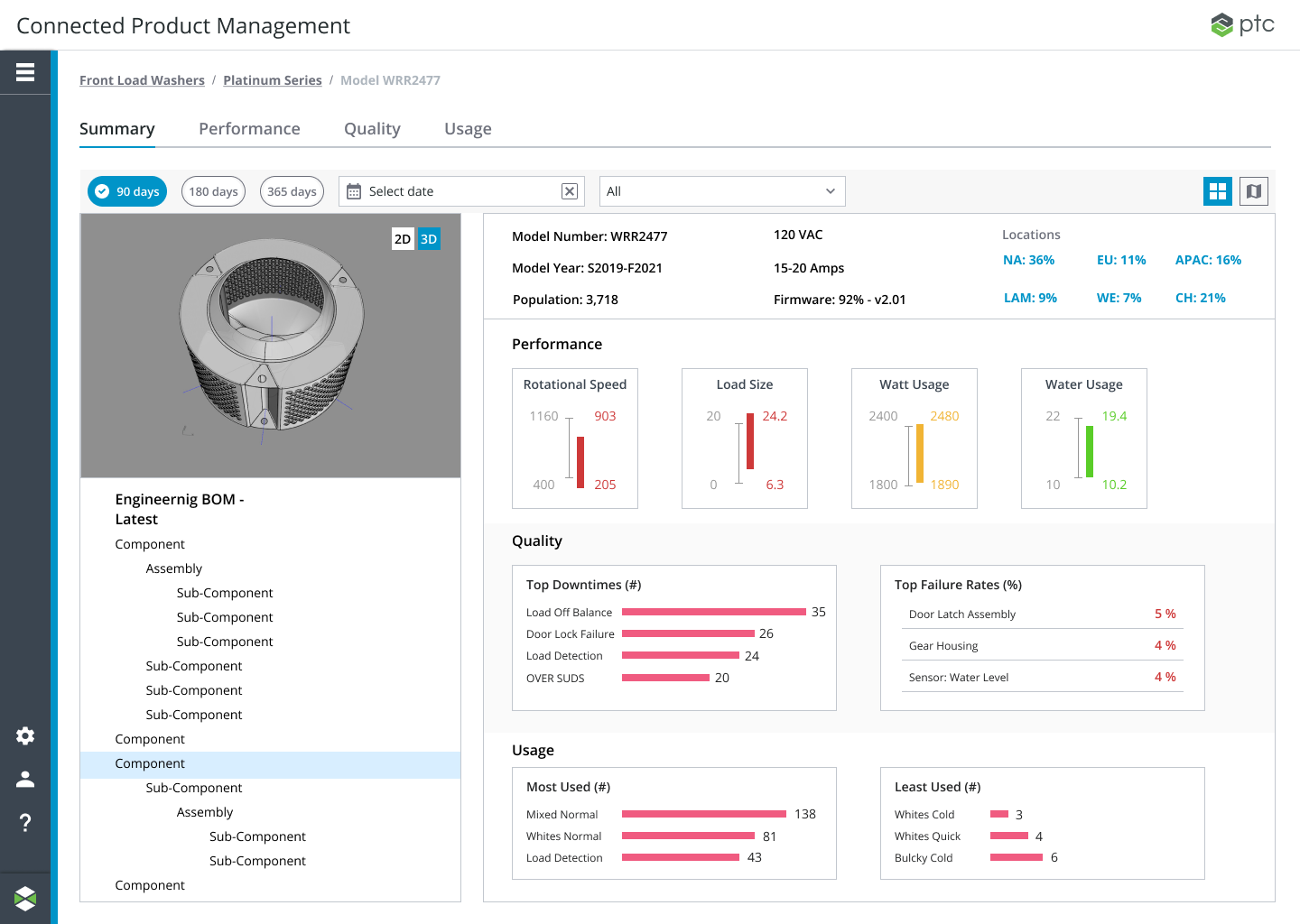
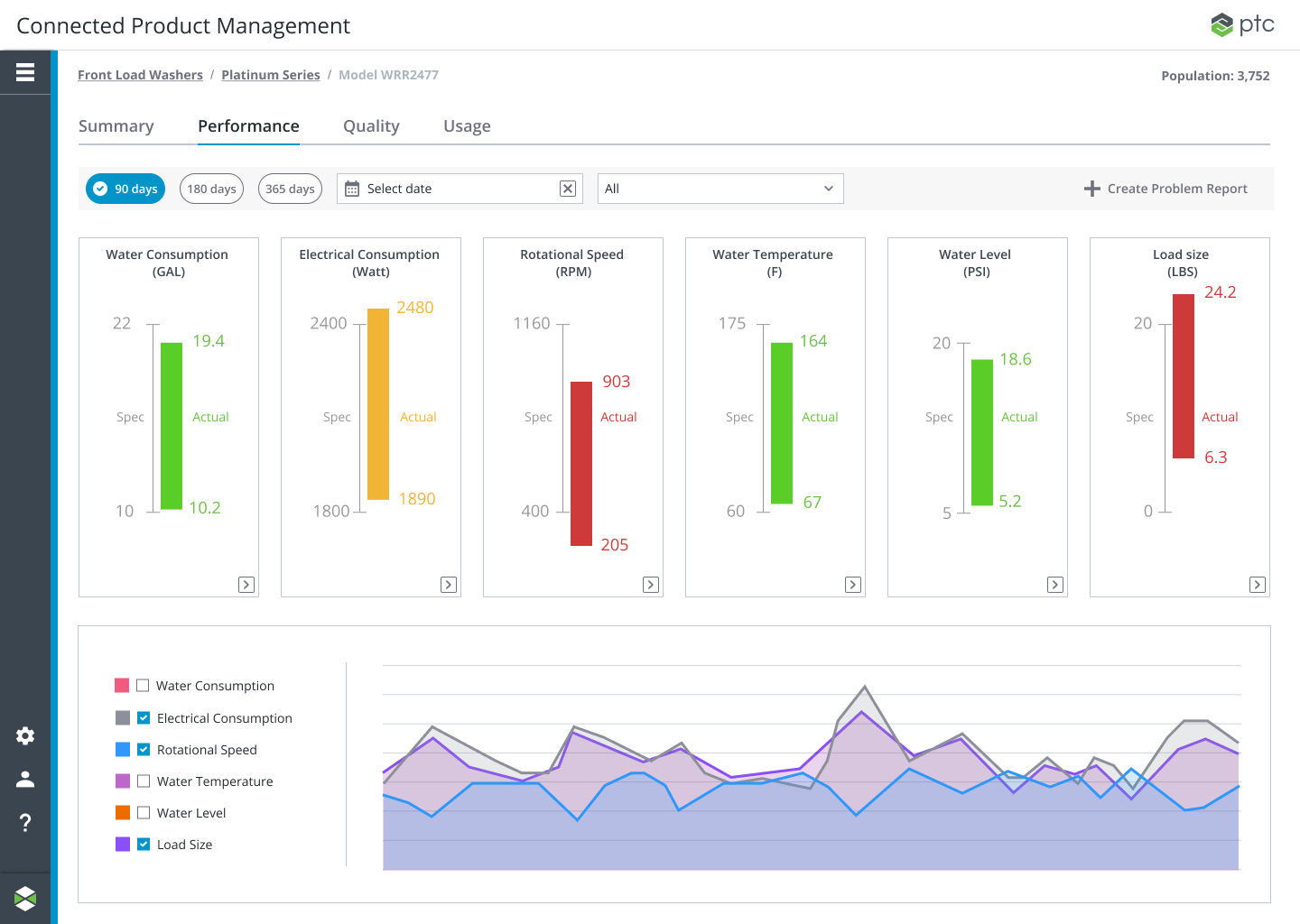
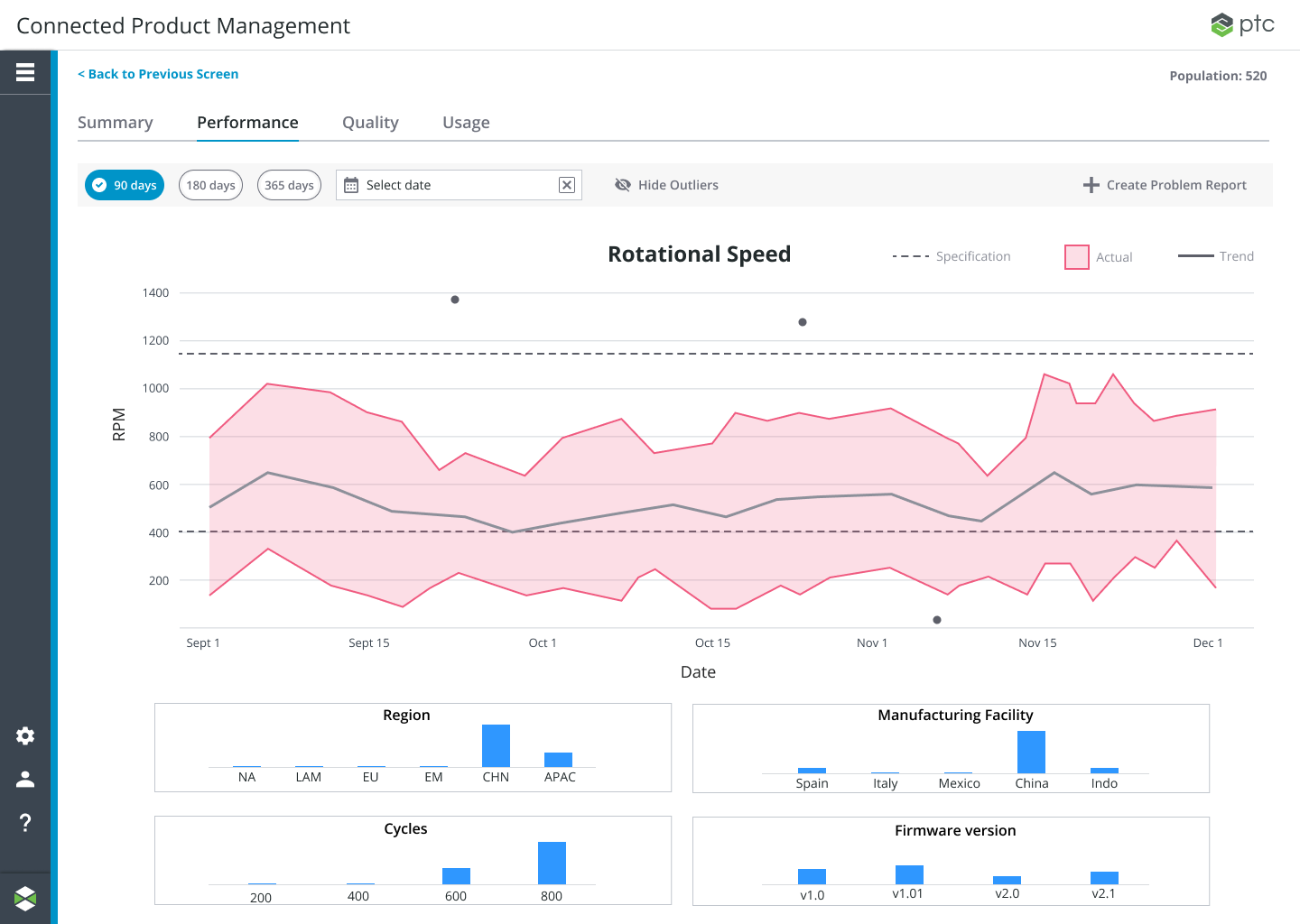
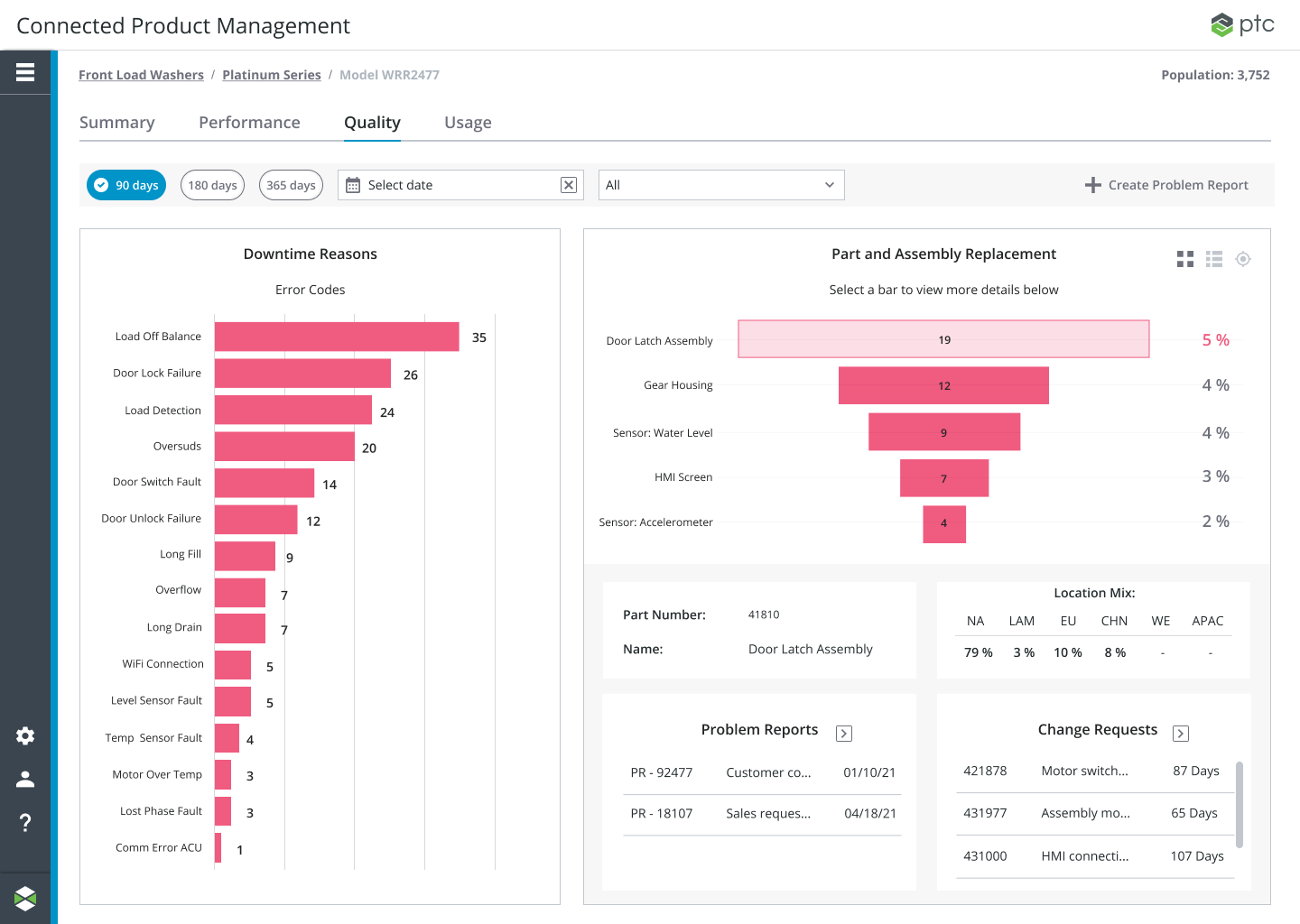
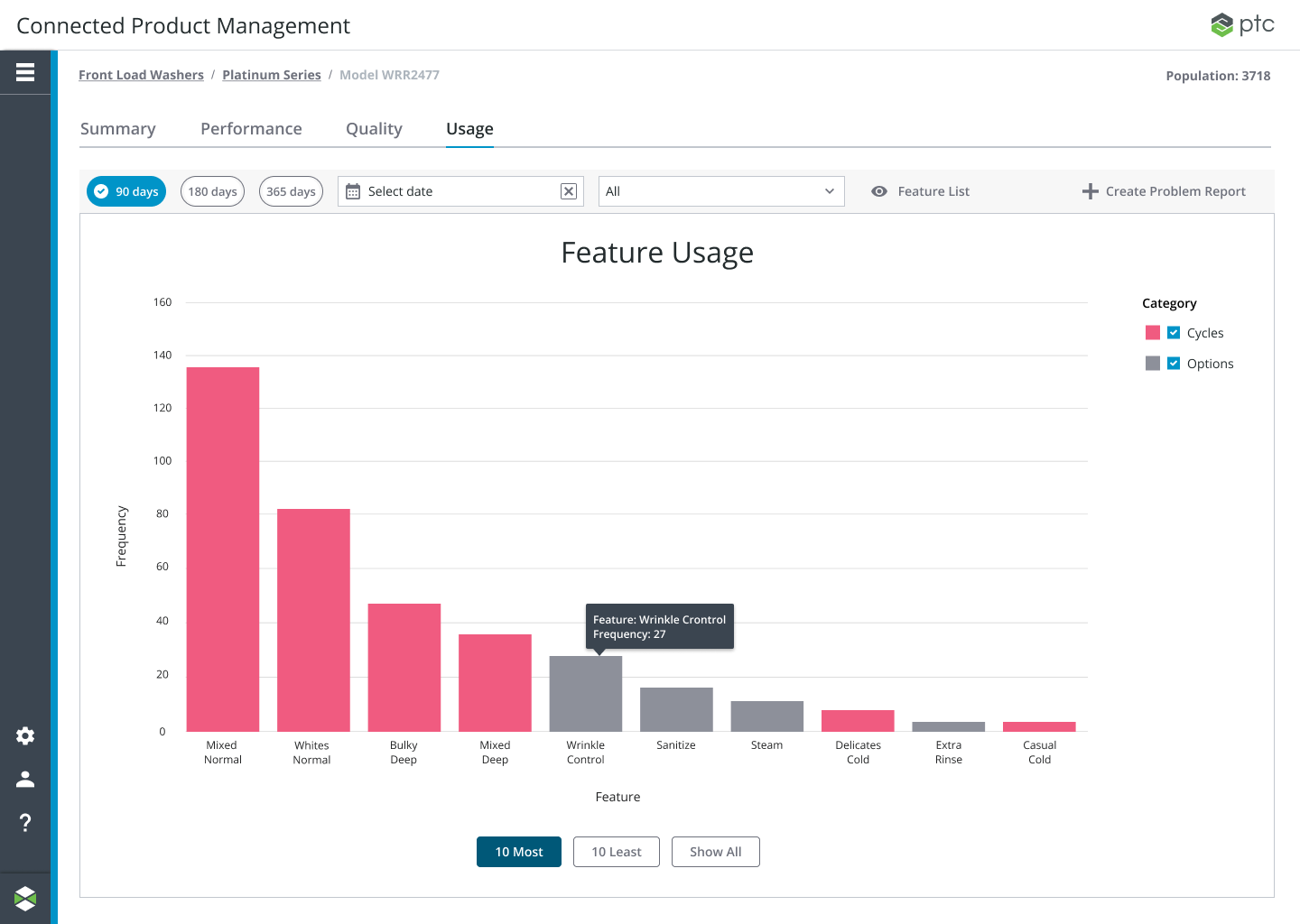
This concept became PTC Orbit, an AI-first asset intelligence MVP that unified data from multiple systems into a single system of record — enabling field service, project management, and engineering teams to act on fleet-level data, see real-time performance patterns, resolve issues faster, and surface predictive maintenance and redesign opportunities that had been trapped across siloed systems.
Vision Prototype
PTC Orbit and DPM sit on opposite sides of the same coin: DPM helps a plant manager act inside their own infrastructure; Orbit helps a PM or engineer see patterns across an entire fleet out in the field. Data isn't valuable until someone can act on it — whether that data lives on one factory floor or across thousands of machines in the wild.
What this project taught us and what I would do differently…
We were genuinely excited about what ML could surface from years of aggregated fleet data, and we spent real time getting up to speed on it — learning the fundamentals alongside the design work, well before it was standard practice on a project like this. But even with that lens, our instinct was still to visualize the pattern and let a human draw the conclusion: here's the chart, here's the anomaly, you decide what it means. What I'd do differently now is push the AI layer one step further — have the system say "here's the likely cause, and here's the recommended fix," not just surface the pattern and step back. That's exactly the gap the industry's since closed: systems that recommend, not just dashboards that display.
I identified this problem in 2018, before generative AI made "unifying fragmented asset data" a widely pursued product category. Years later, the industry independently built full GenAI-native products to solve exactly the problem I'd scoped — validating that the direction, not just the execution, was right.