My Role
As Principal UX/UI on Luna, a new robotic system for minimally invasive lung biopsy, I owned the software design end-to-end, defining the UX vision from 0-to-1 in a highly ambiguous, first-to-market environment. I led UX and interface design across the software, translating a complex technical system into an intuitive, trustworthy control experience, and partnered with industrial design, human factors, engineering, and research to deliver one coherent system. The direction was research-led and grounded in design thinking. I completed competitive and predicate product analysis, user interviews, card sorting, cognitive walkthroughs, and simulated usability tasks to validate complex workflows across six rounds of formative studies. The design encompassed multiple personas and included physicians, nurses, radiologists, and service professionals.
Problem space
Luna's hardware is ahead of the market, more accurate witha a smaller catheter than anything available. The design problem was that better hardware is not enough. Navigating the lung means threading a dense, branching maze of airways to reach a lesion, and the clinician has to know exactly where they are, where the target is, and how to get there without losing orientation. If they cannot trust what the system is telling them, the robot's accuracy is irrelevant, because no one relies on a machine they do not trust in a procedure where the stakes are a cancer diagnosis. The core challenge was building trust between a person and a robot navigating a space neither can see directly.
Solution space
I worked backwards from the clinician's mental model to three goals: trust, represent the anatomy accurately; simplify, reduce cognitive load; and confidence, understand the situation while keeping control. The software delivers a live AR pathway mapped over the bronchoscopy video, with labeled landmarks, bifurcations, distances, and catheter angles surface at the moment of need. It moved the user from ambiguity to certainty by building a navigable 3D model of the patient's anatomy and let them rehearse the route with a virtual flythrough before committing. Throughout, the human stays the expert: the system shows the right data at the right time and suggests path and biopsy options, but the clinician always has the final say.
High-level overview and mid-fidelity concepts
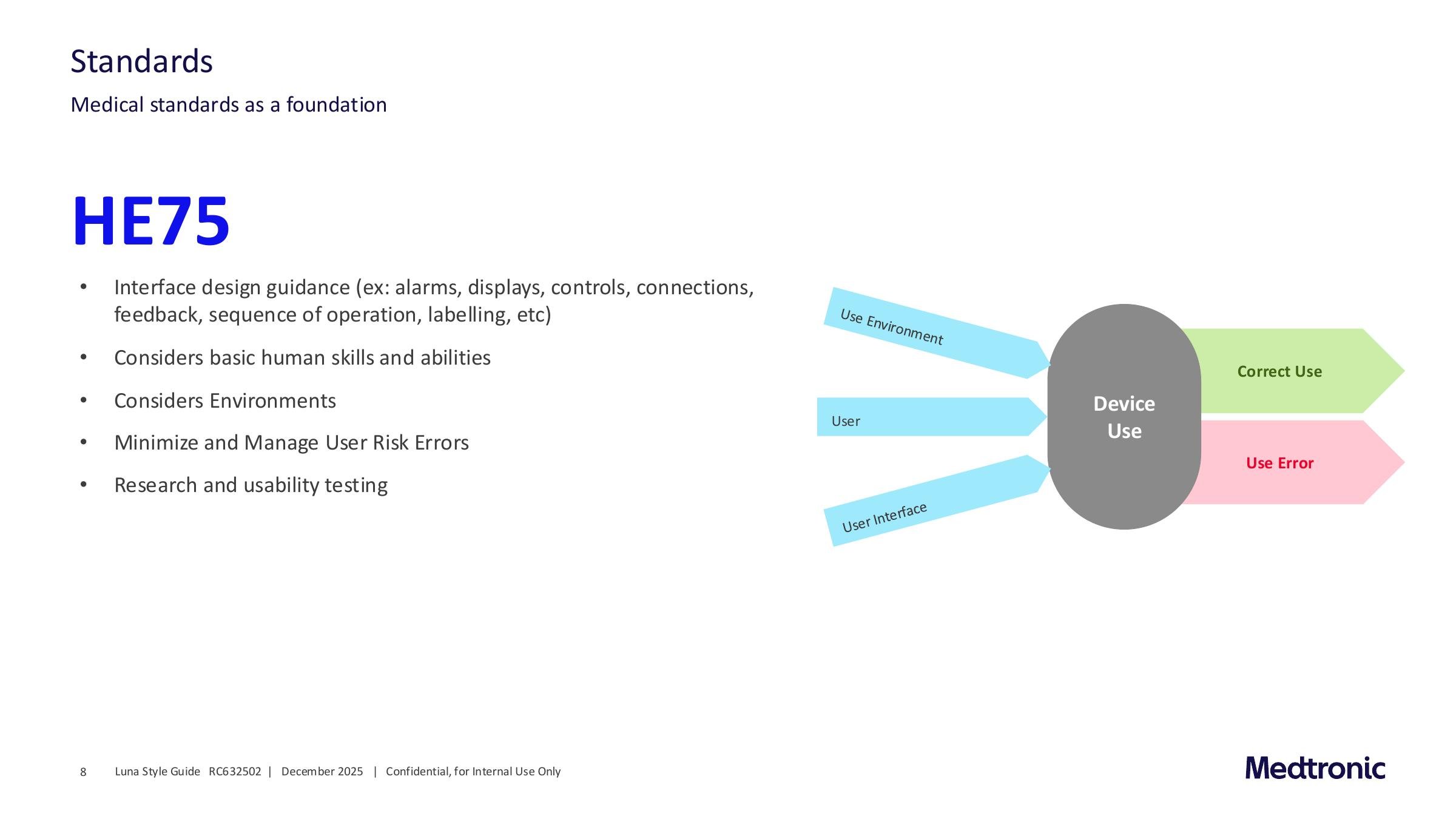
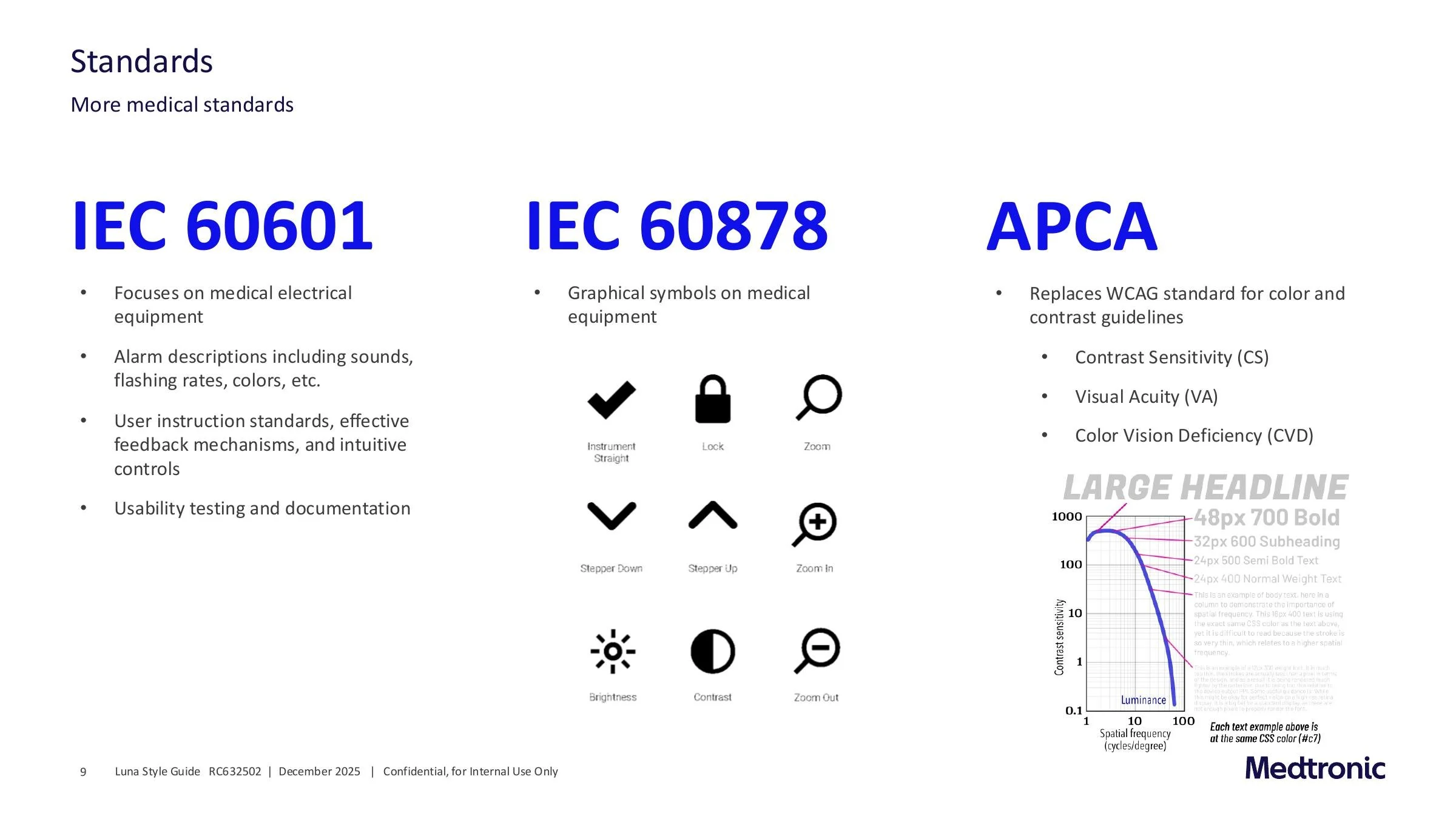
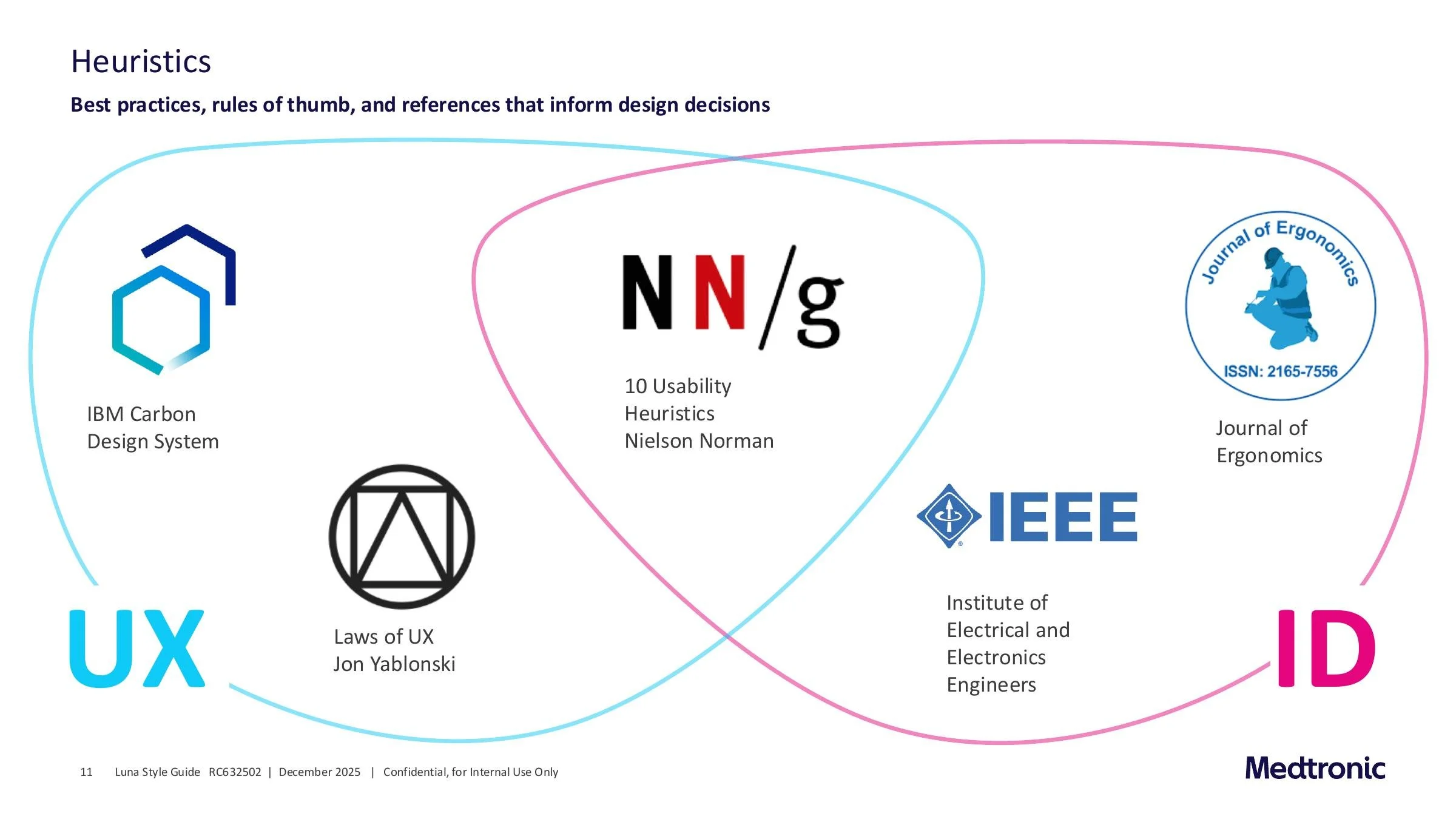
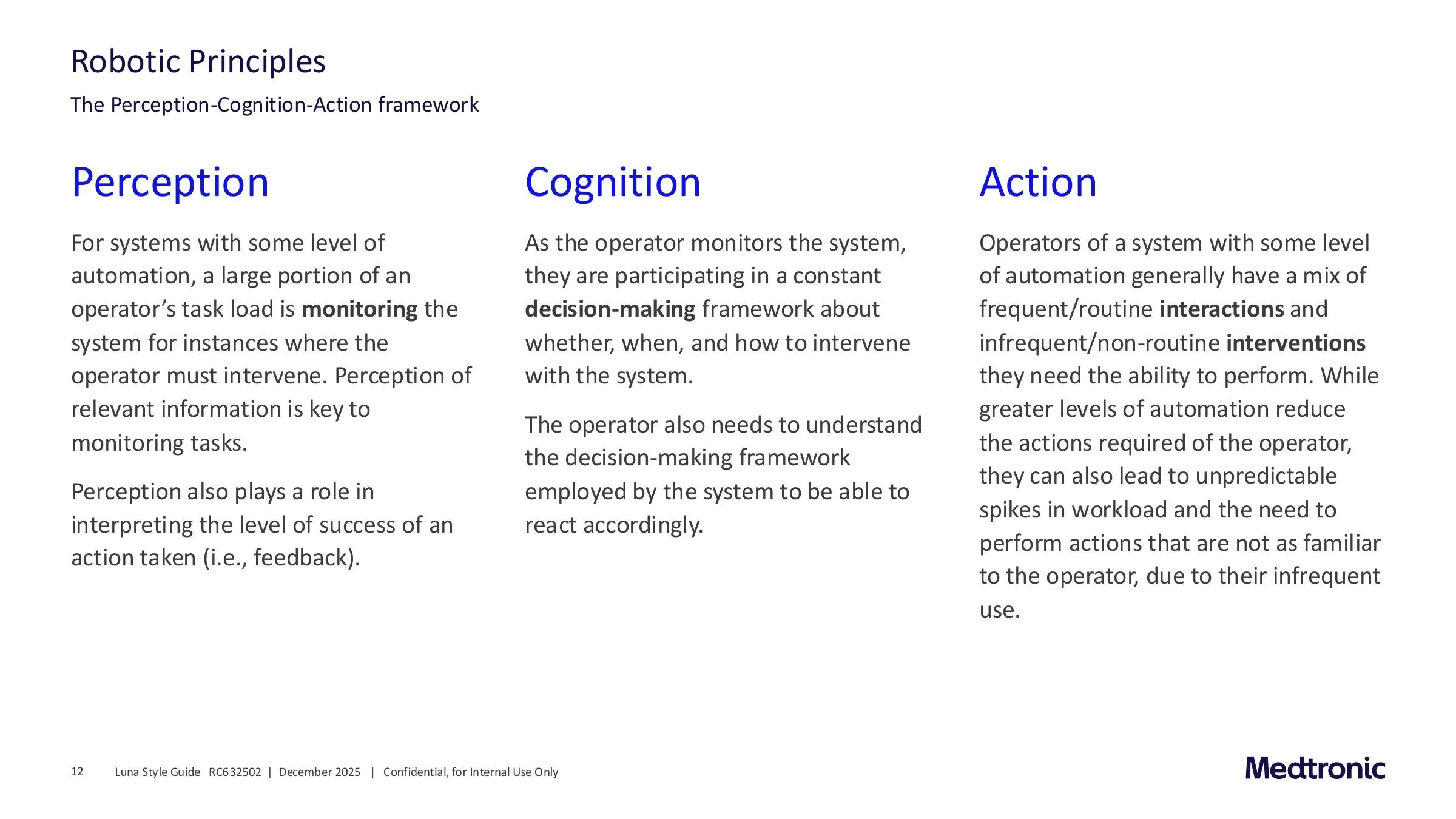
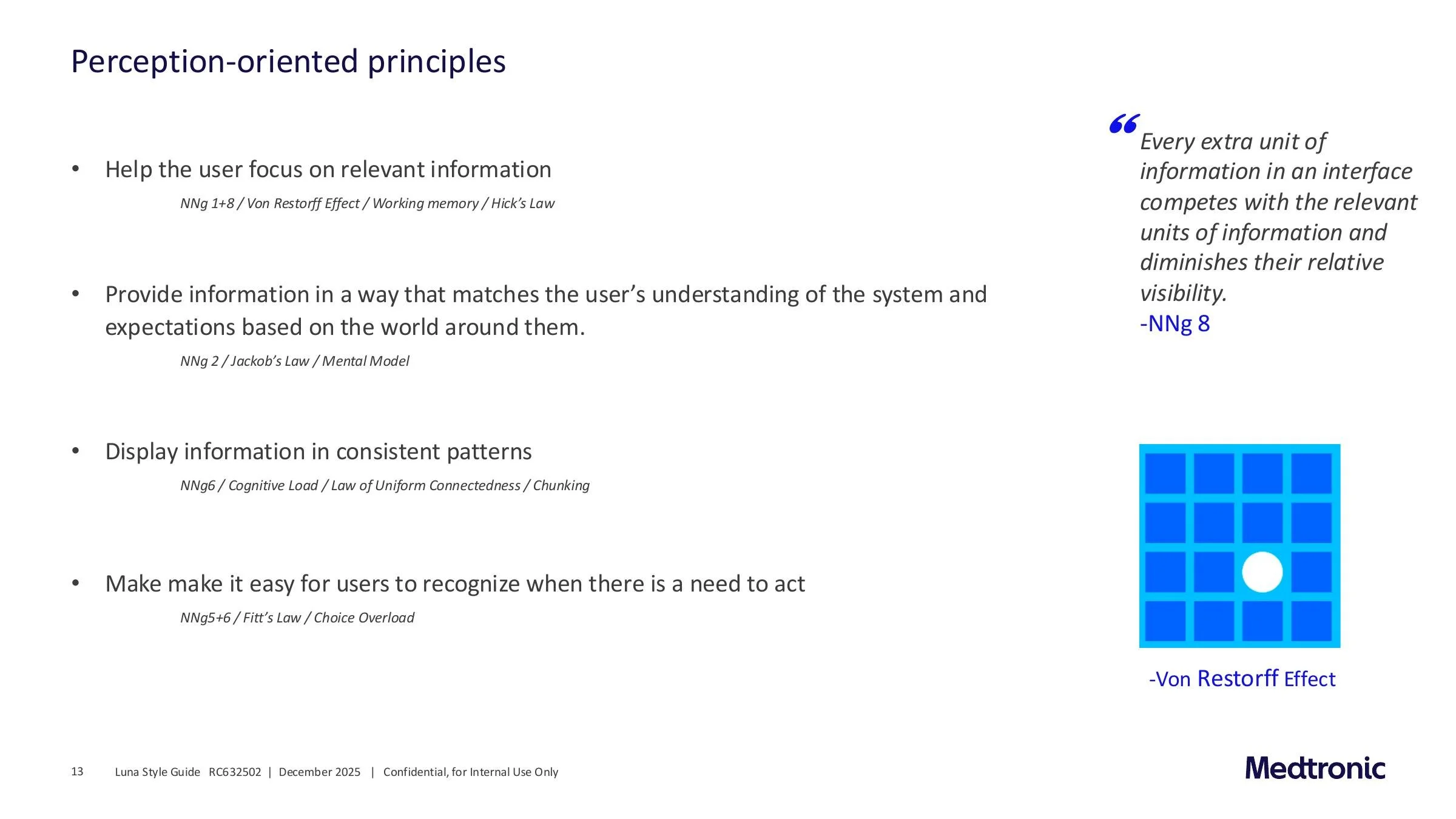
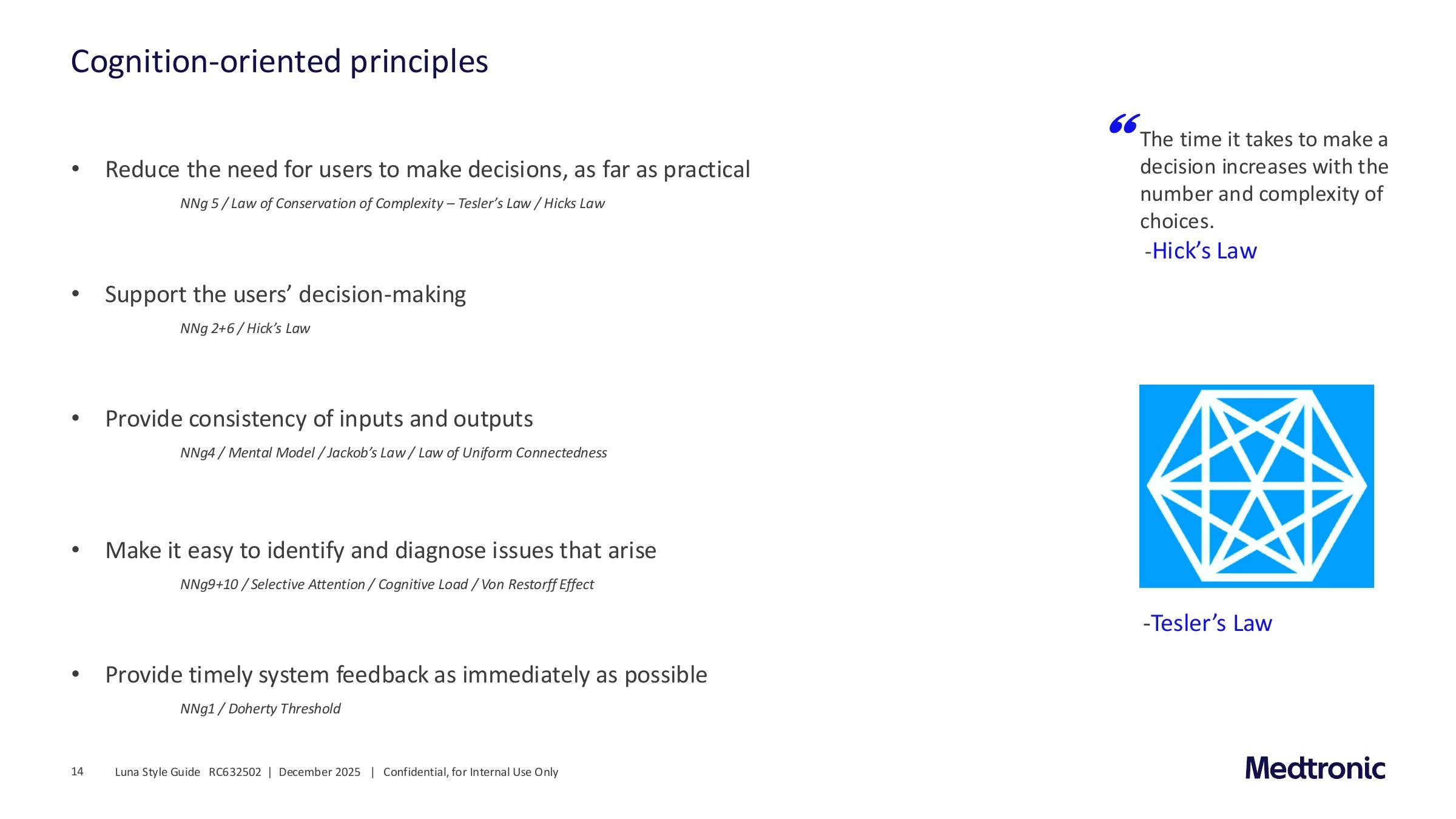
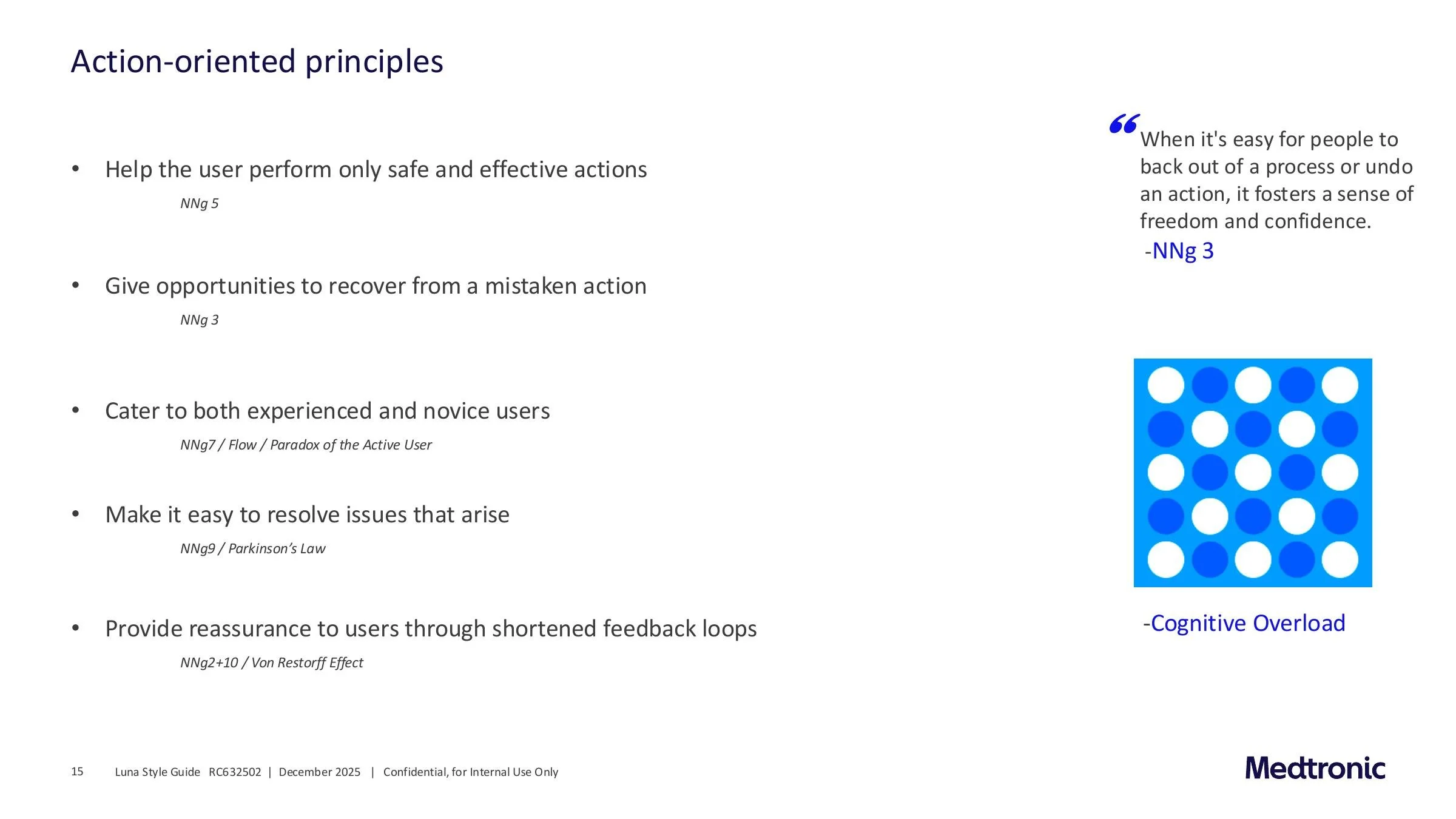
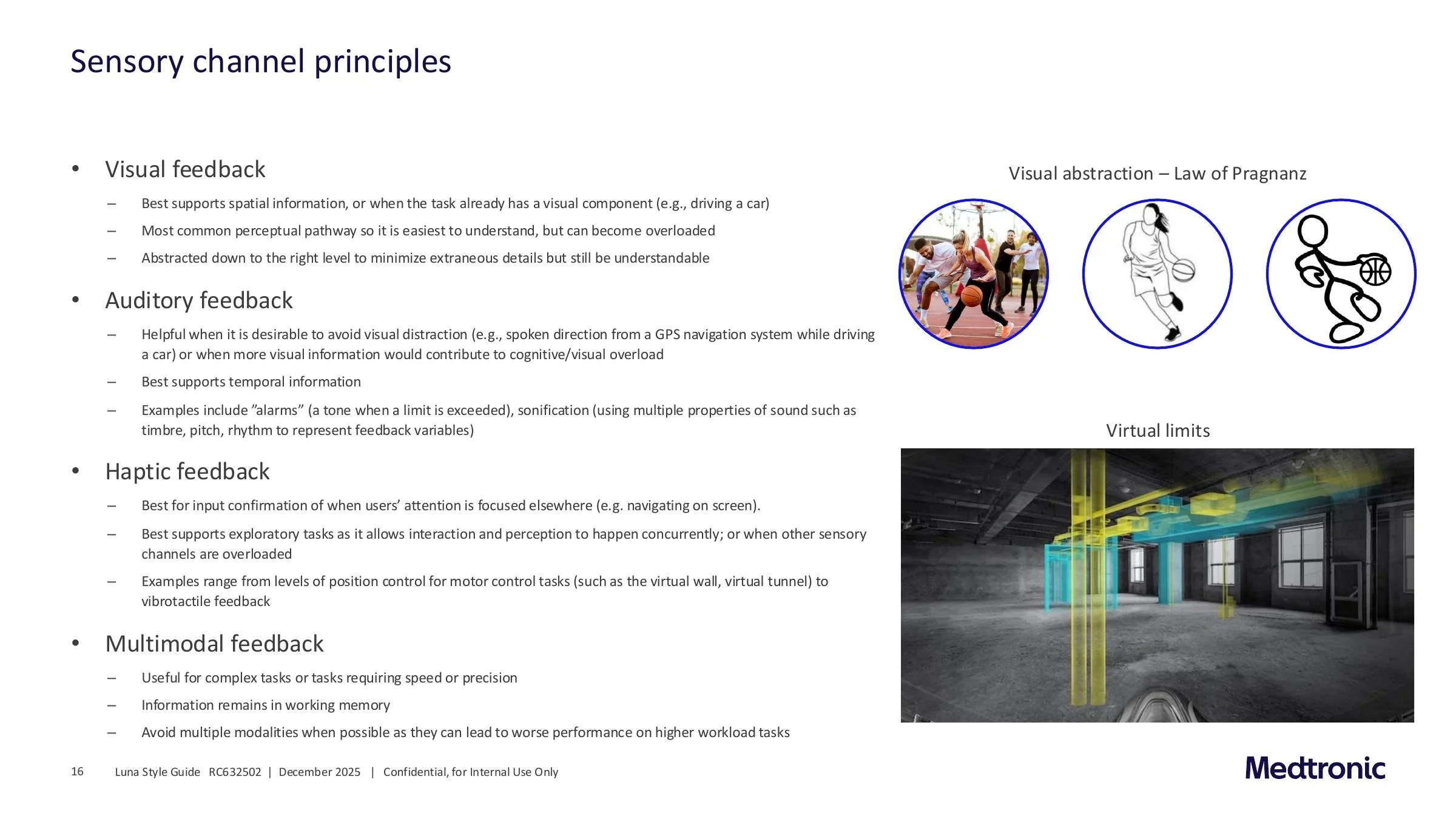
Robotic principles and HRI heuristics
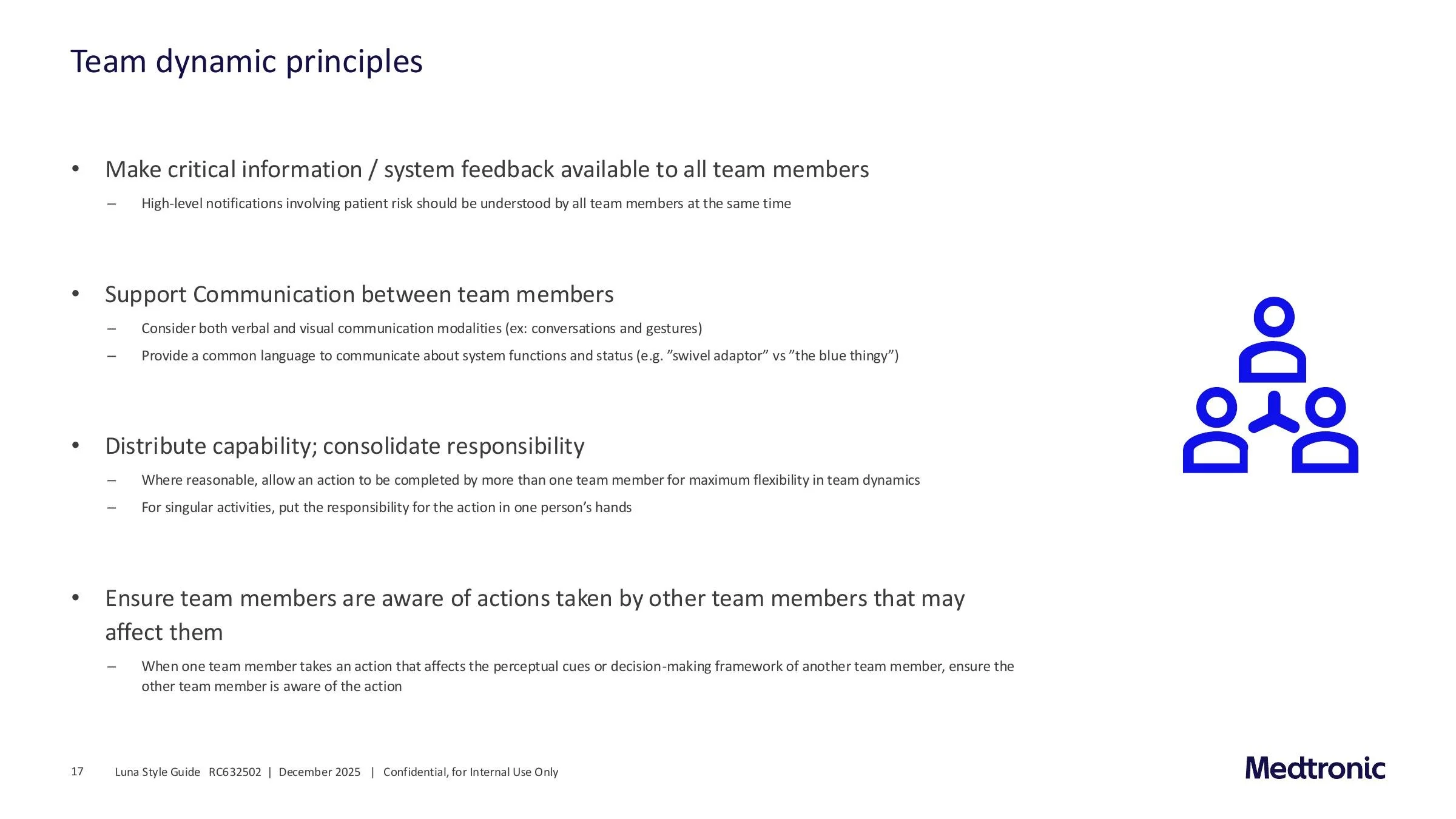
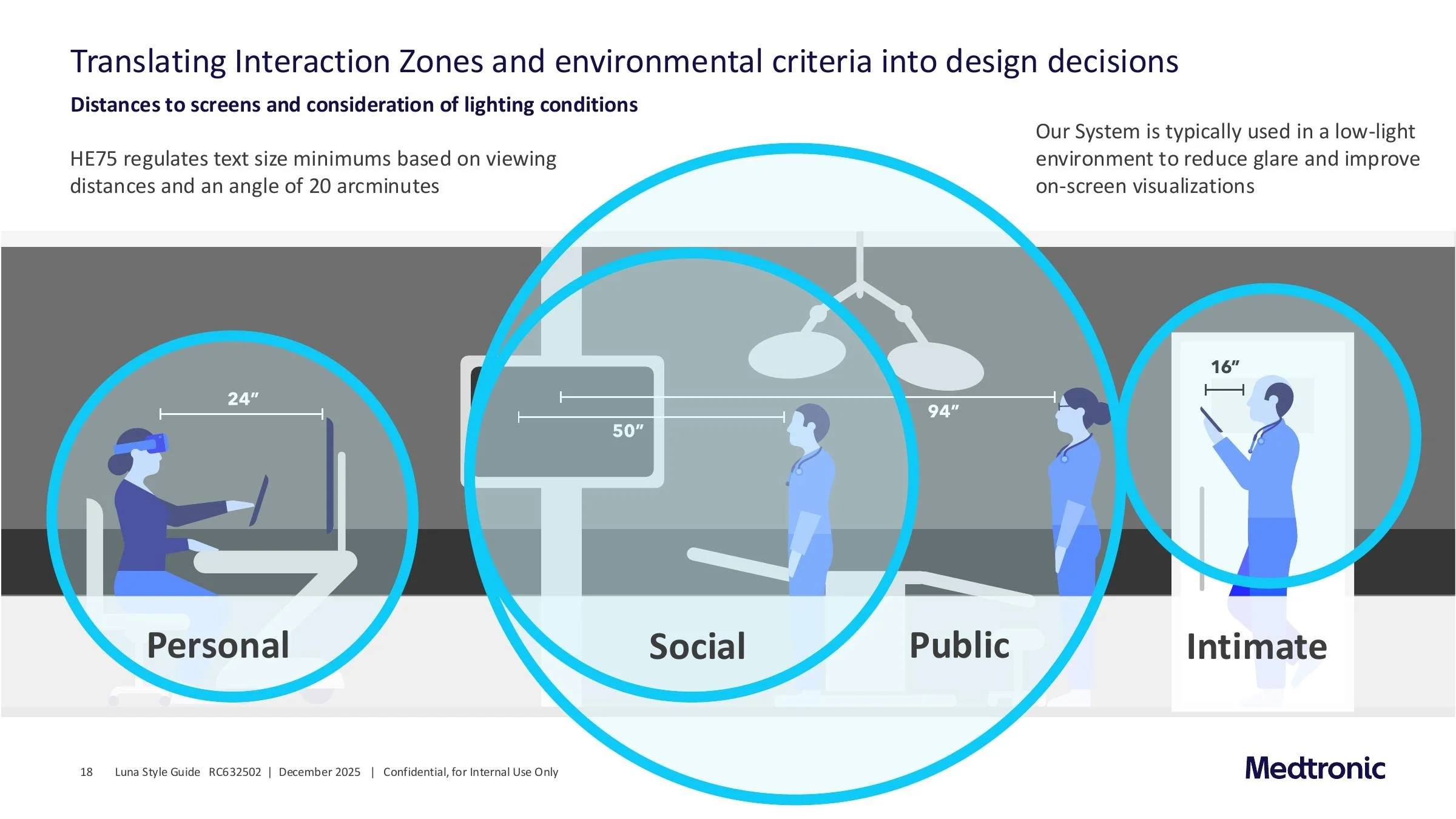
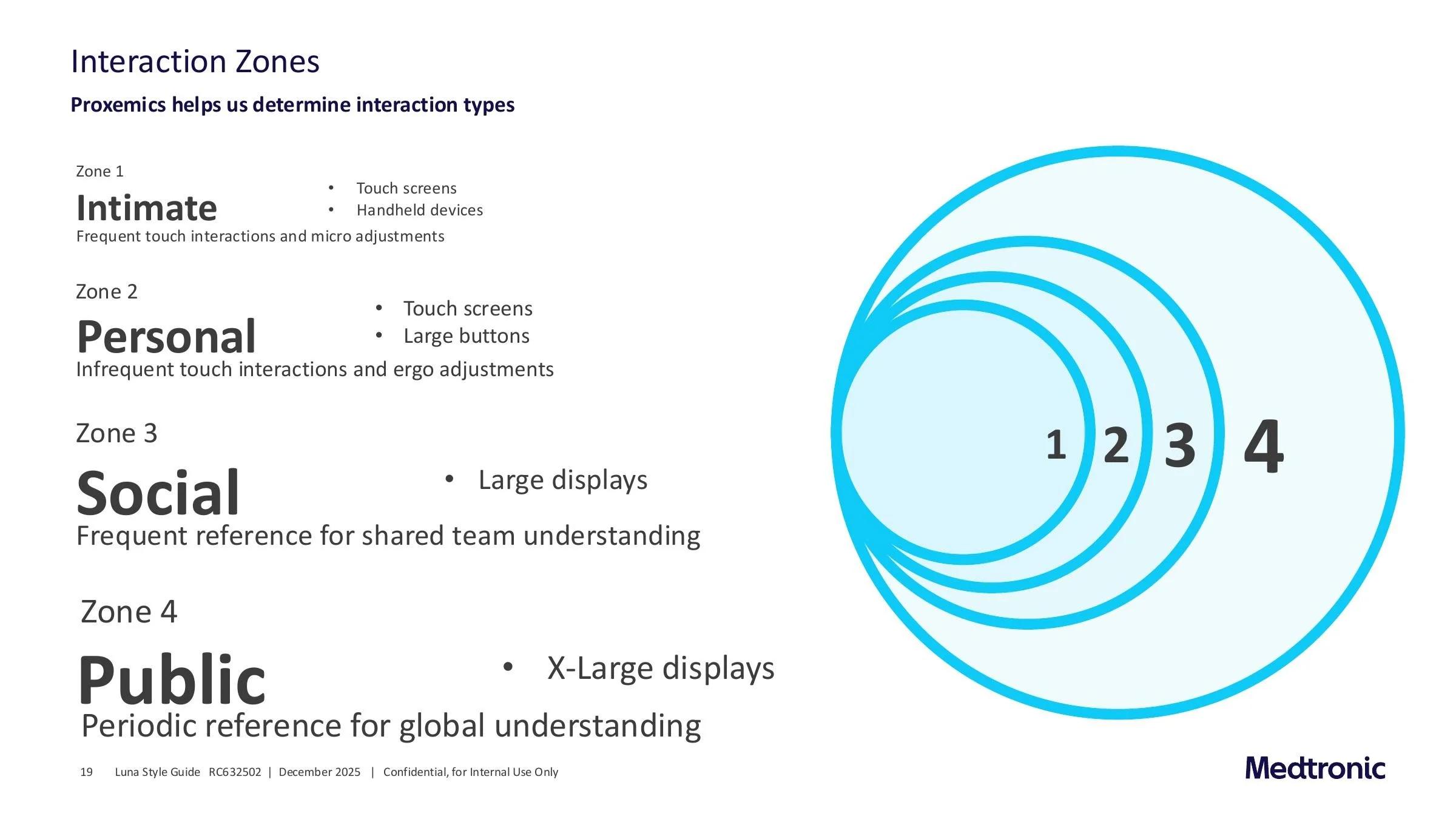
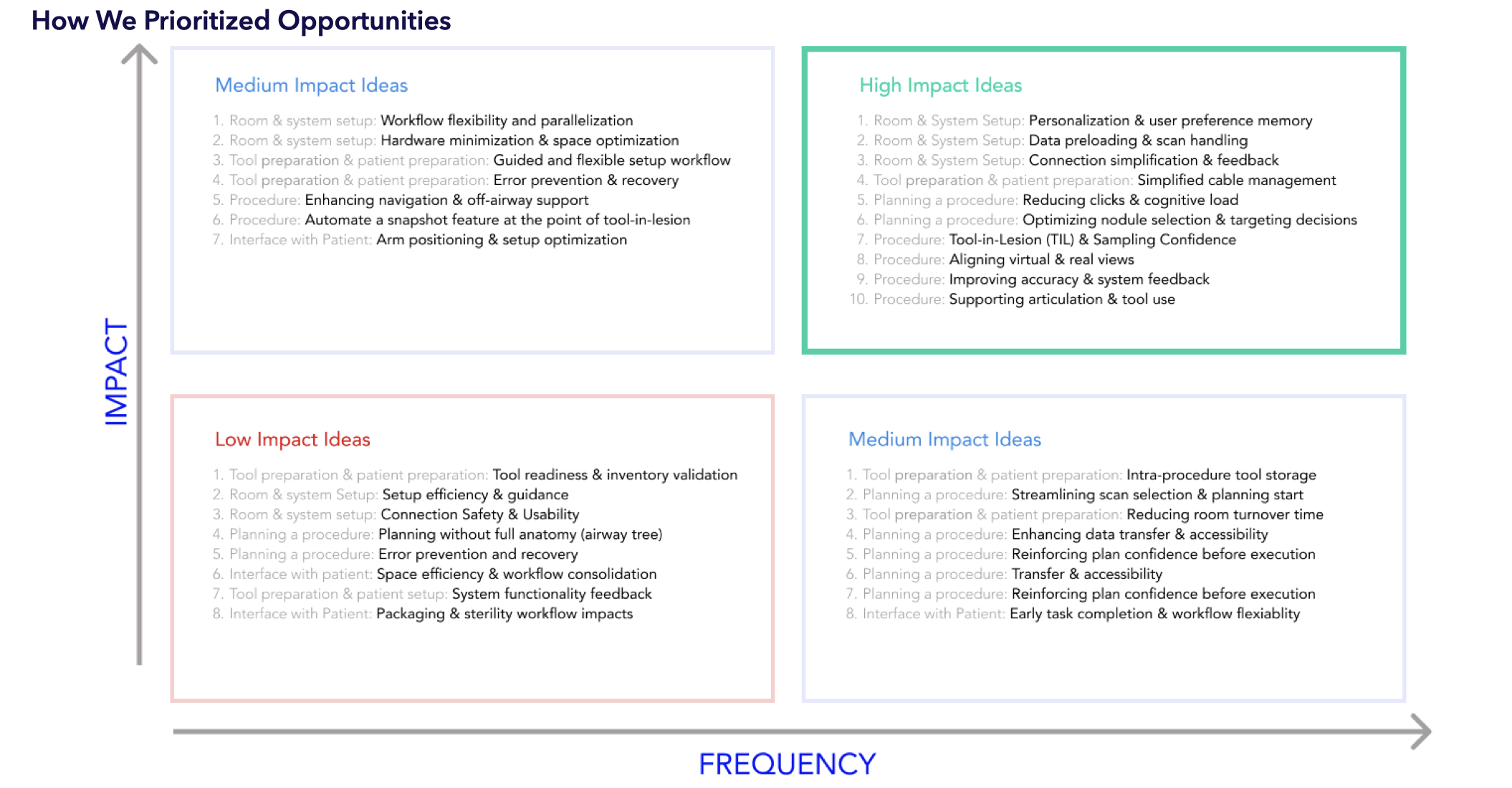
Multi-Persona complex workflows
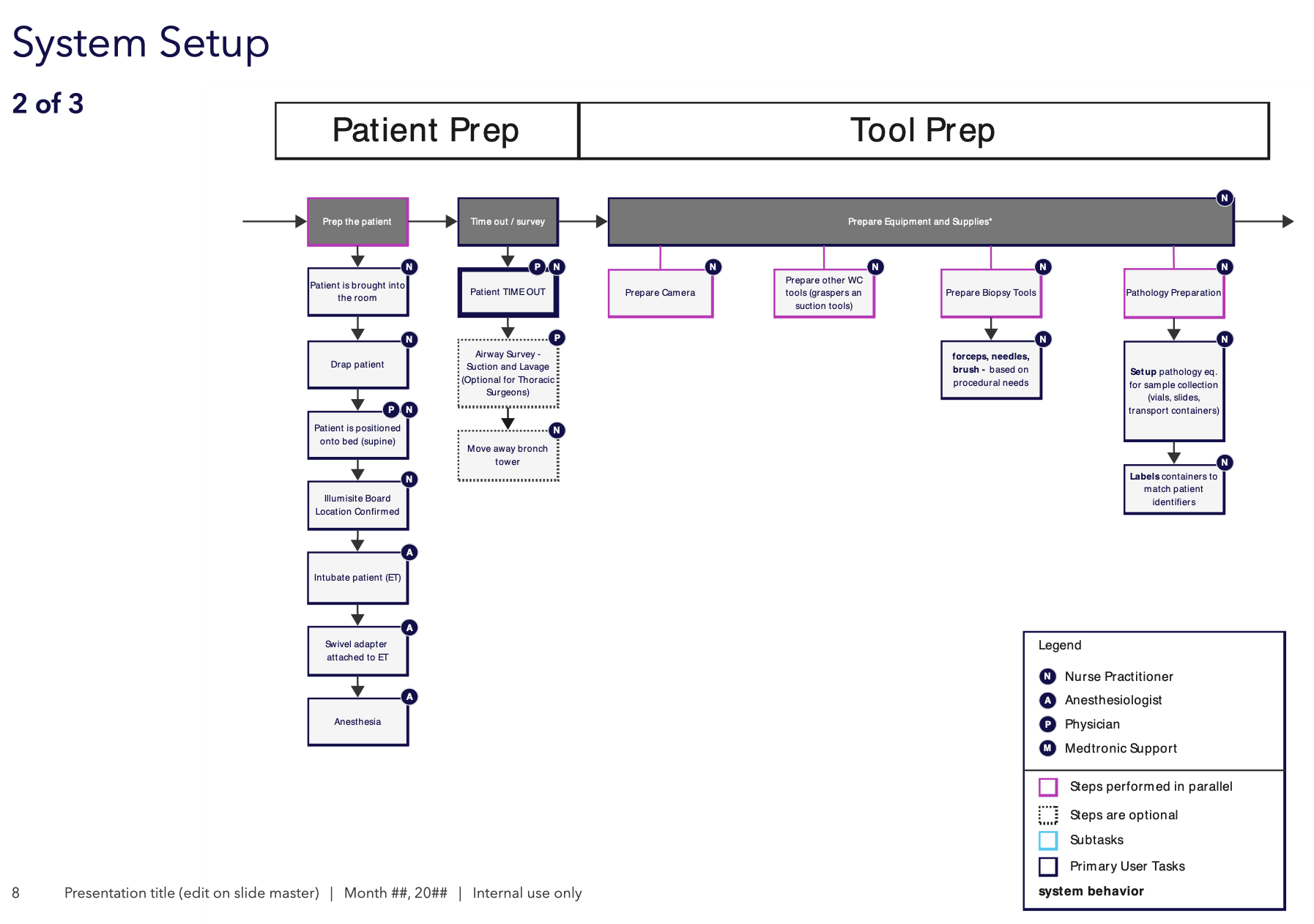
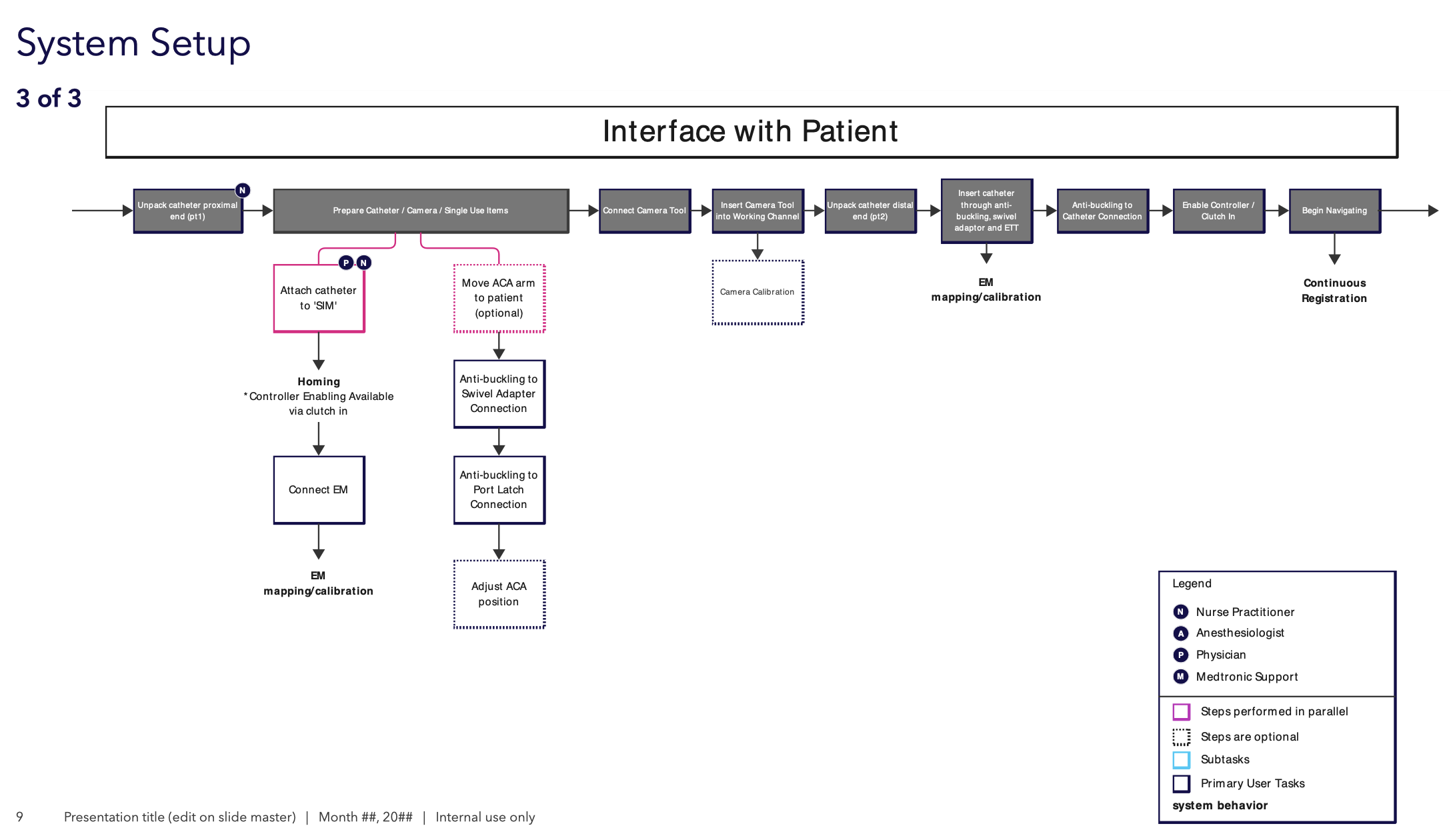
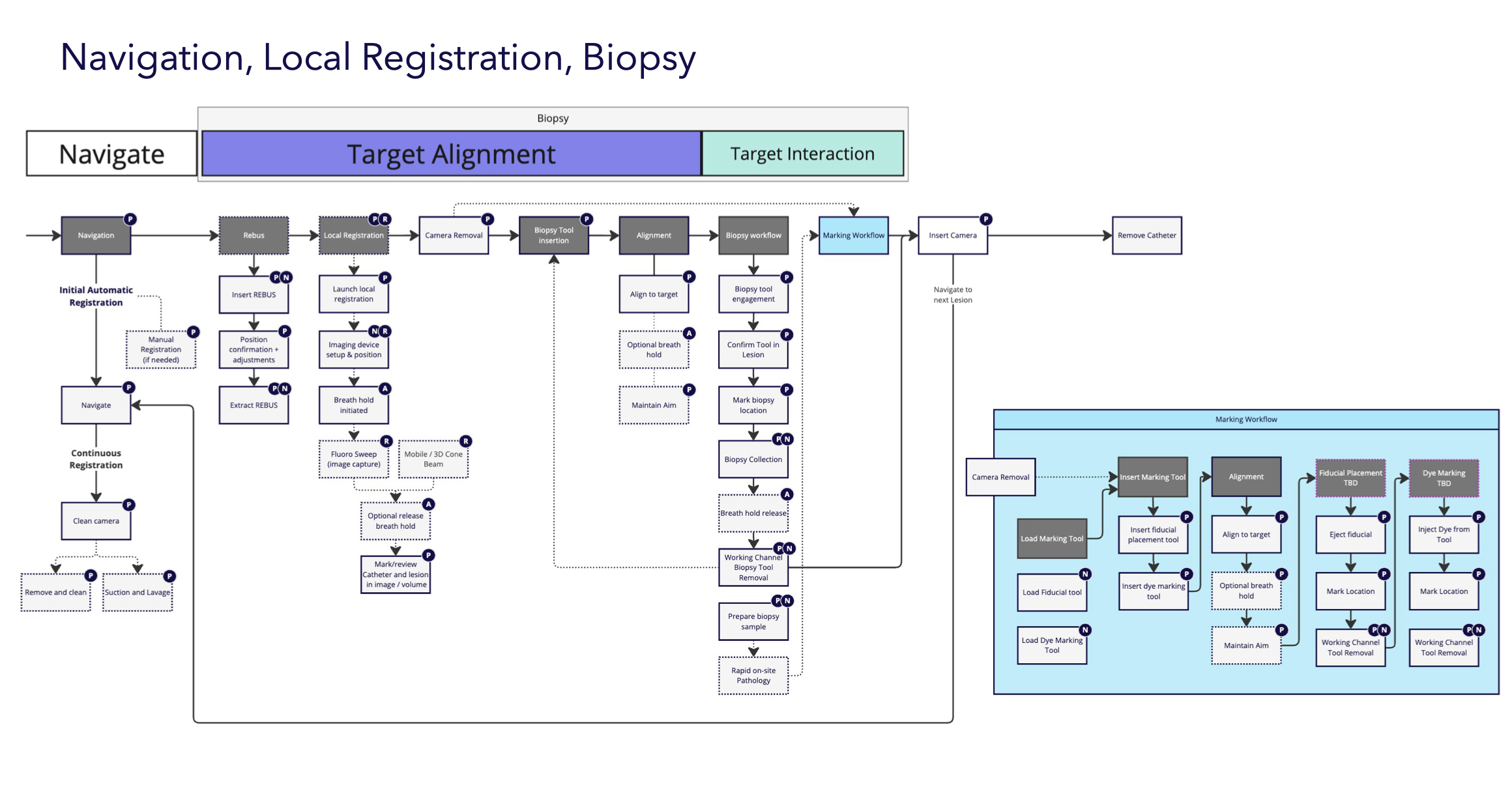
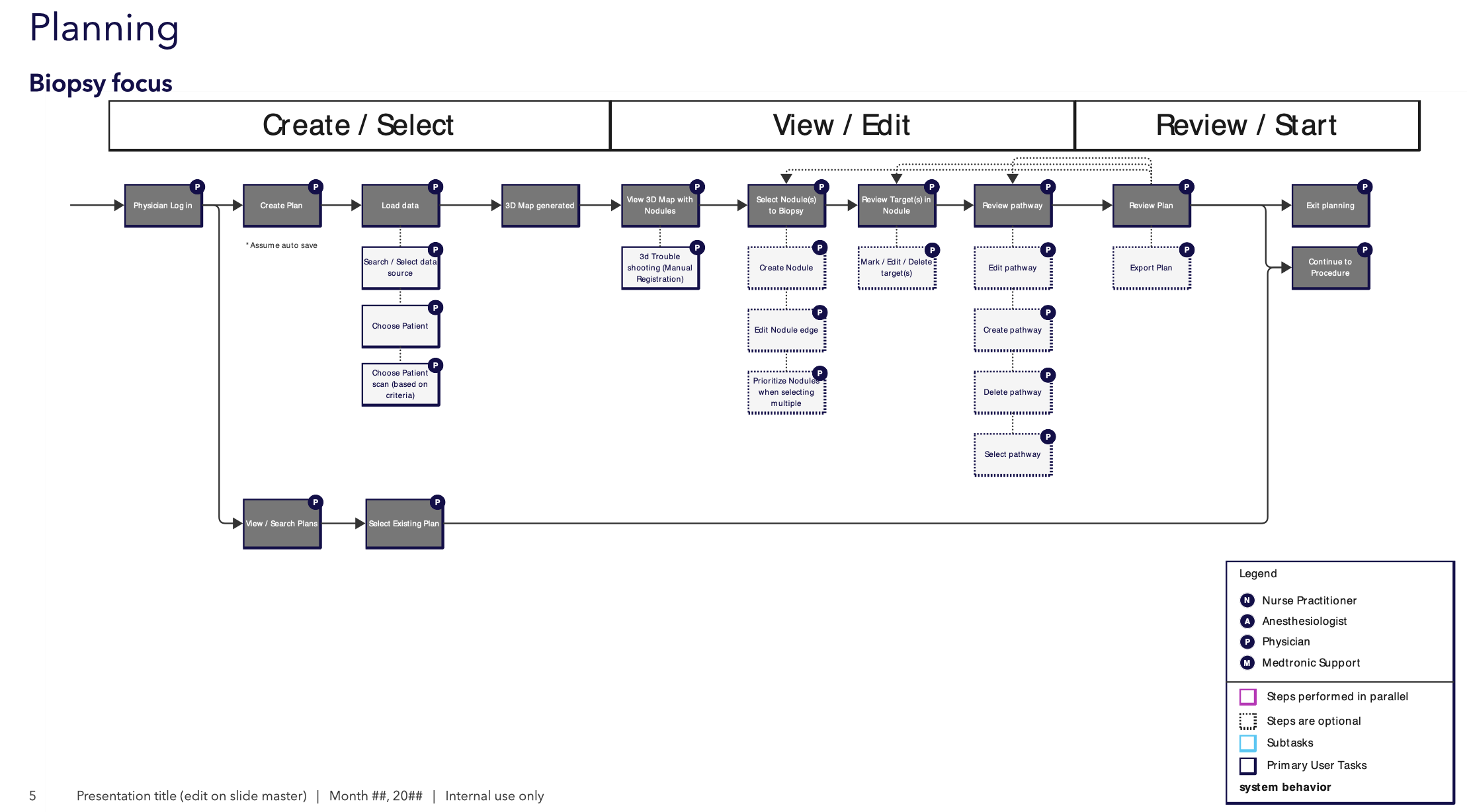
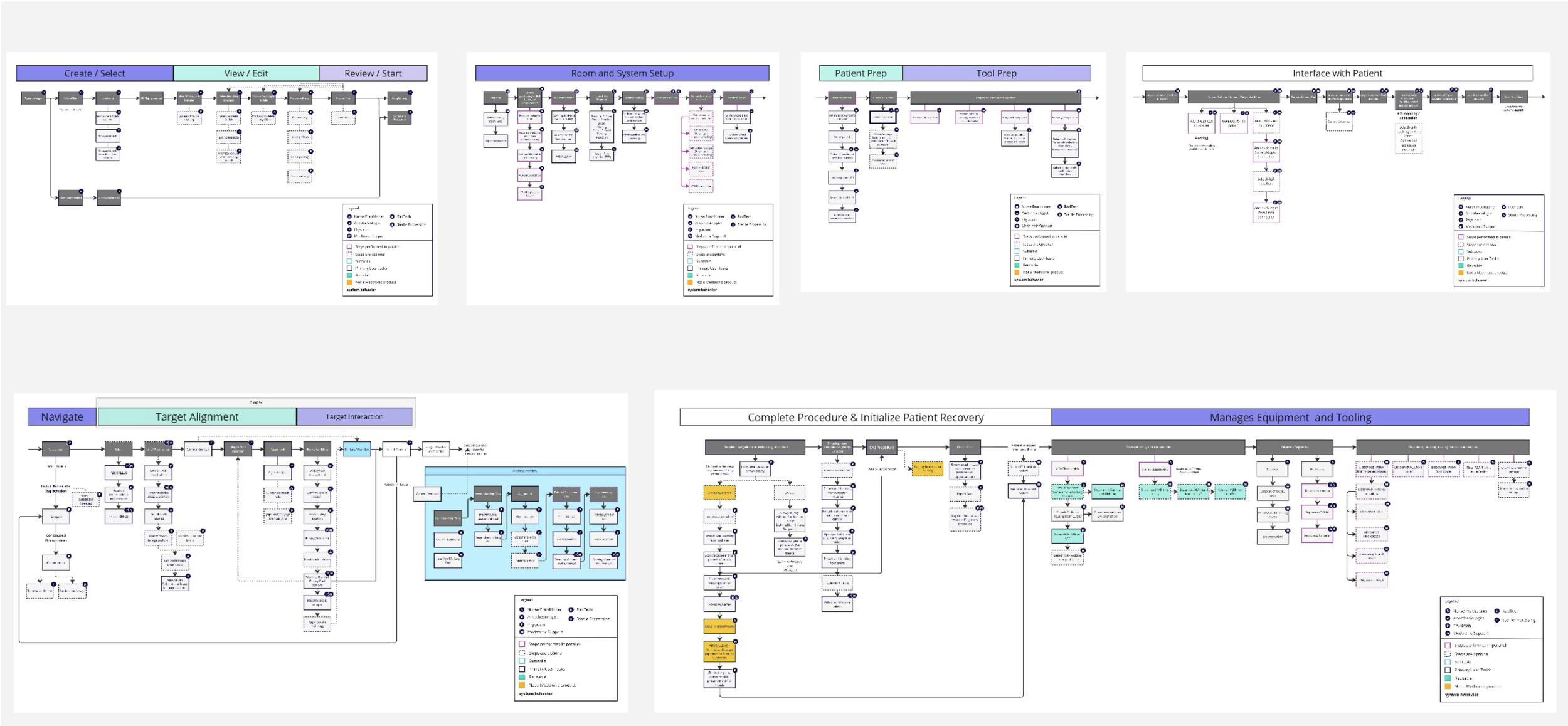
Mid-Fidelity concepts
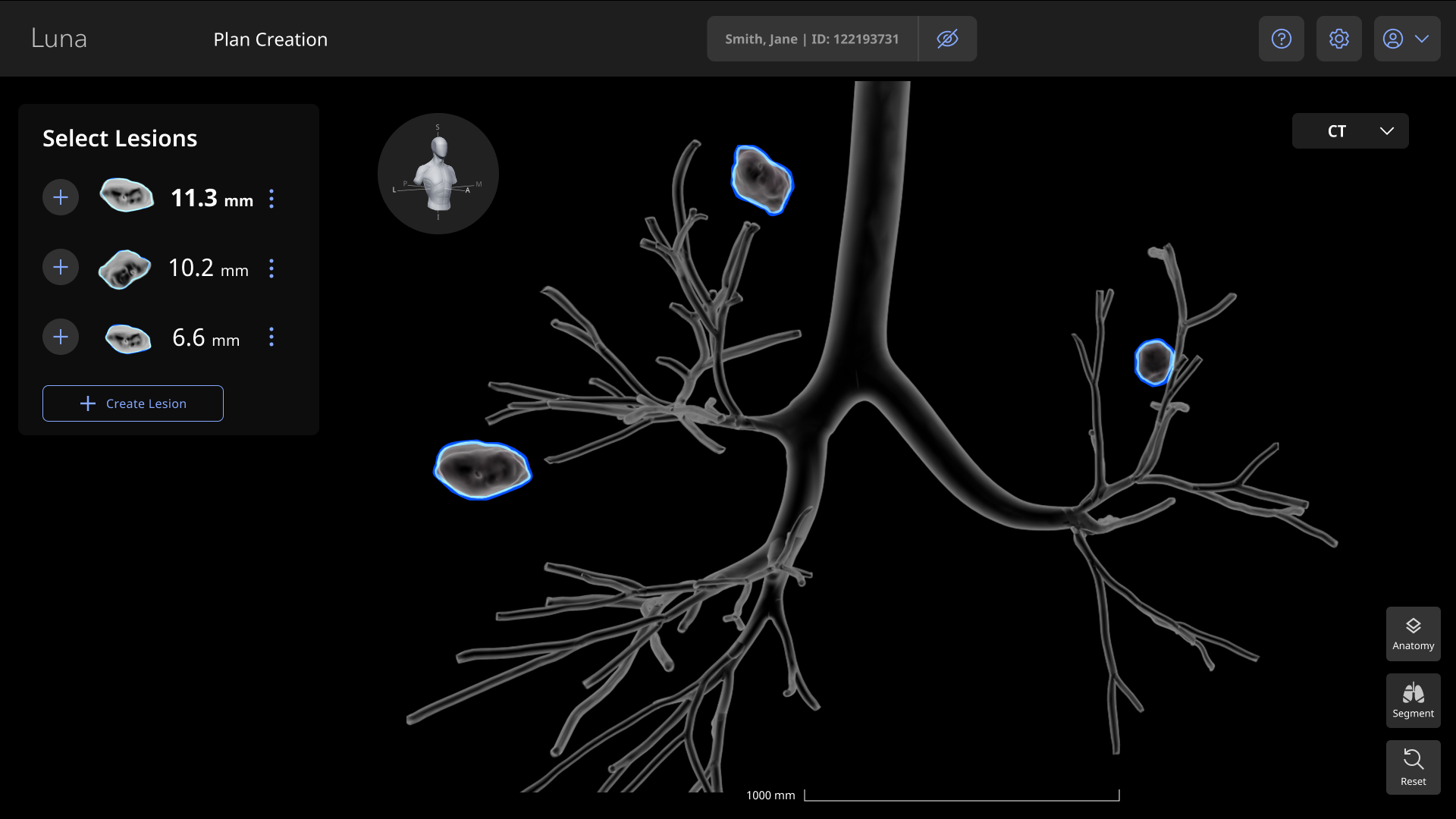
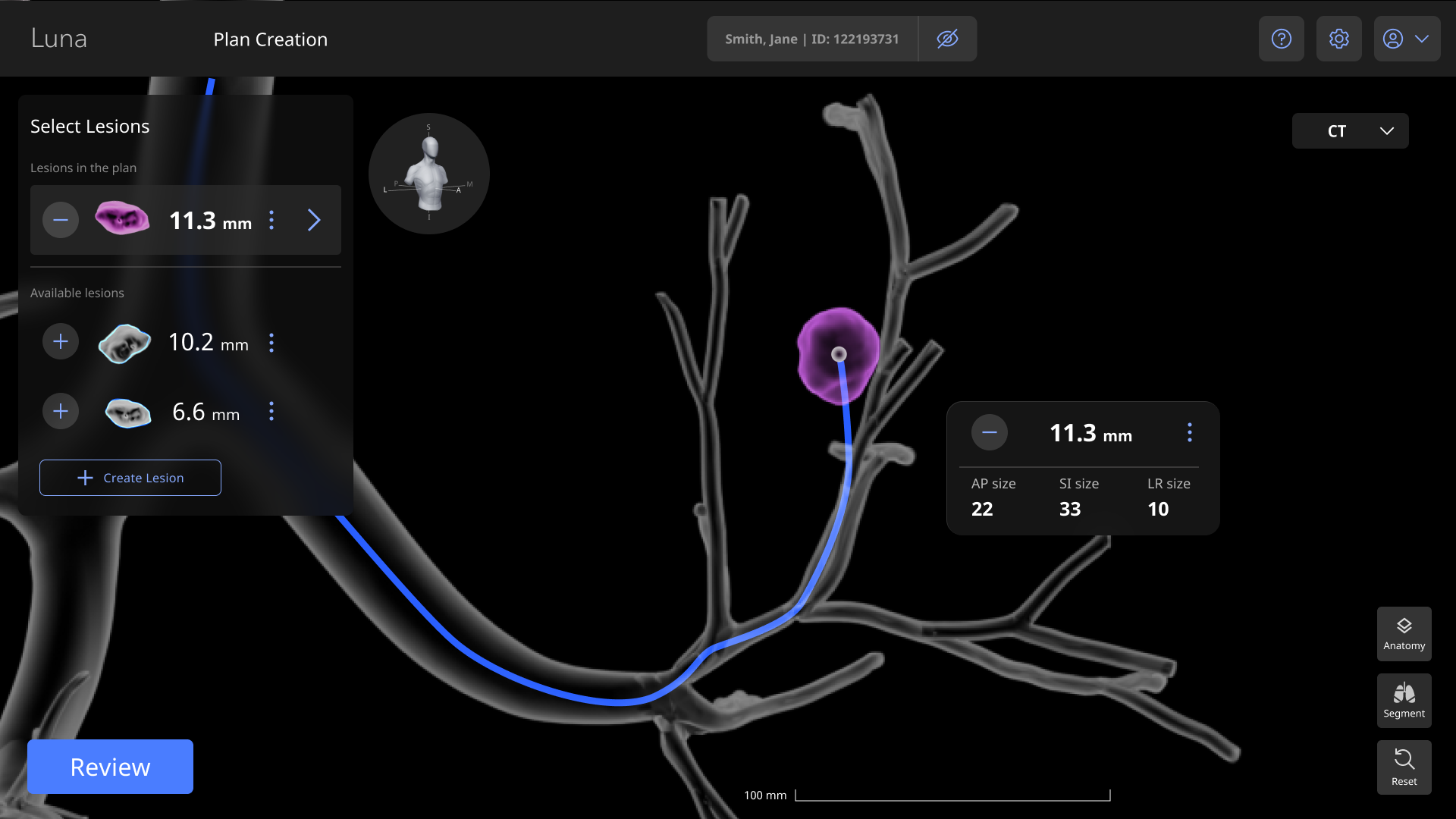
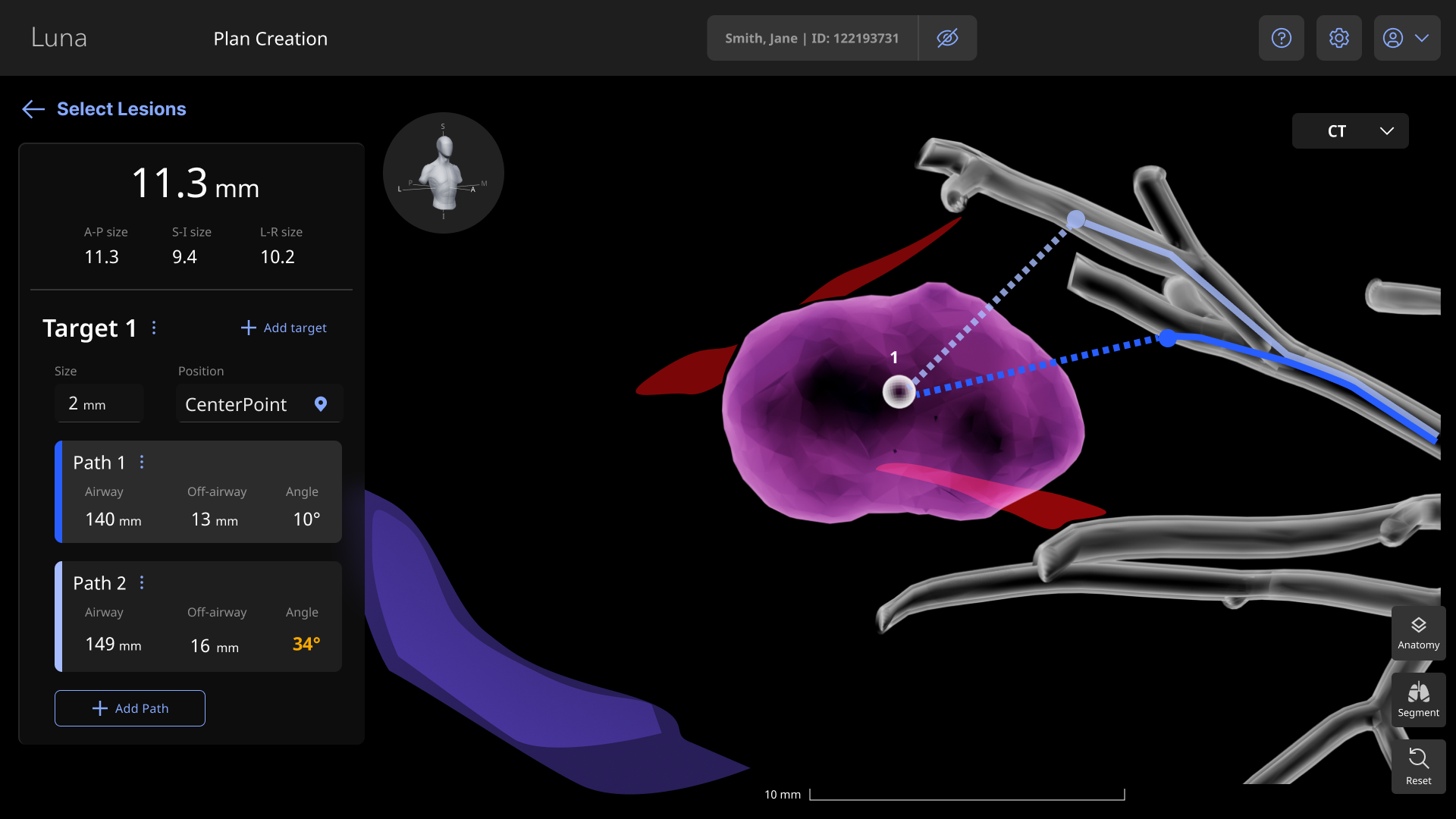
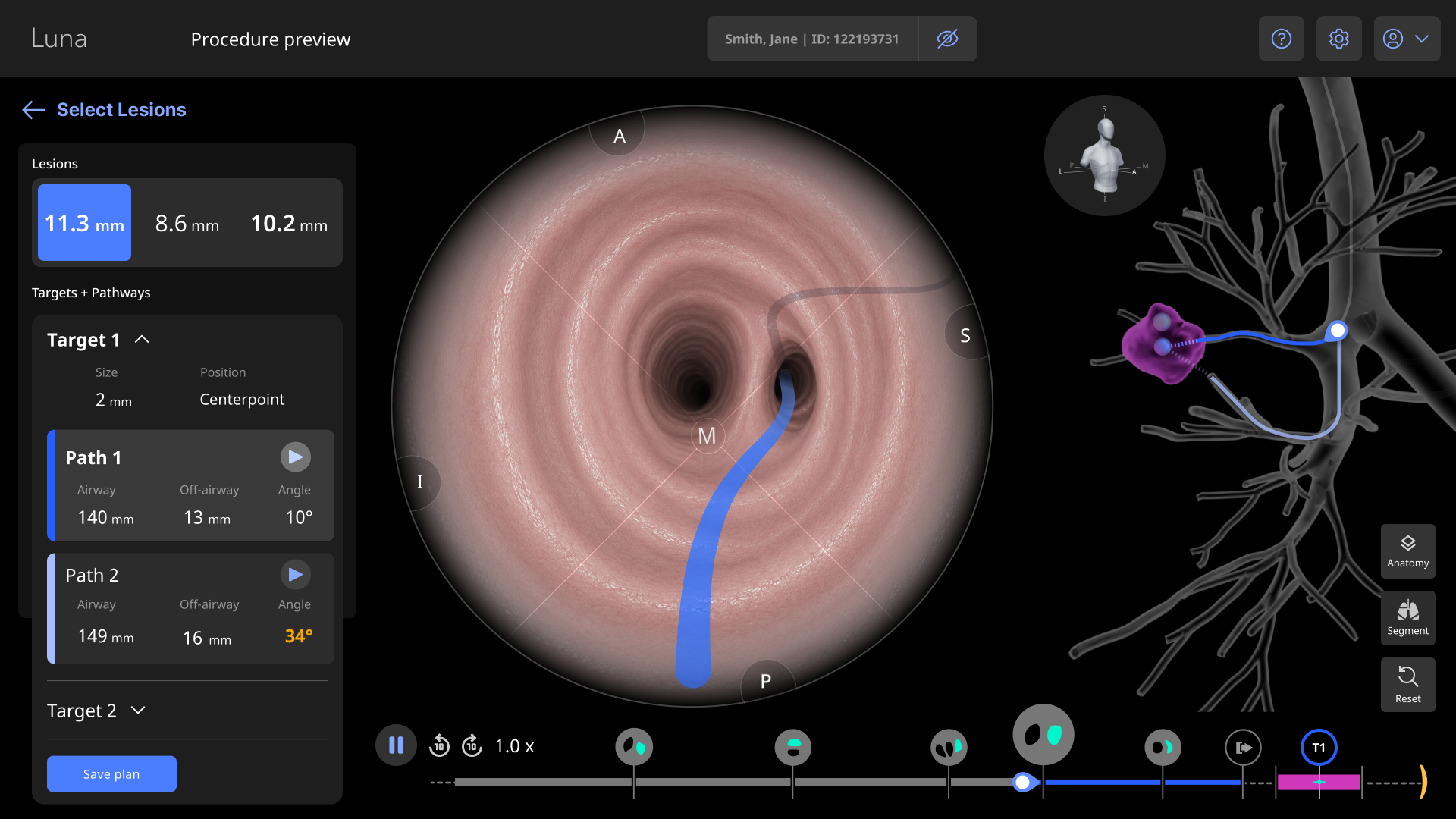
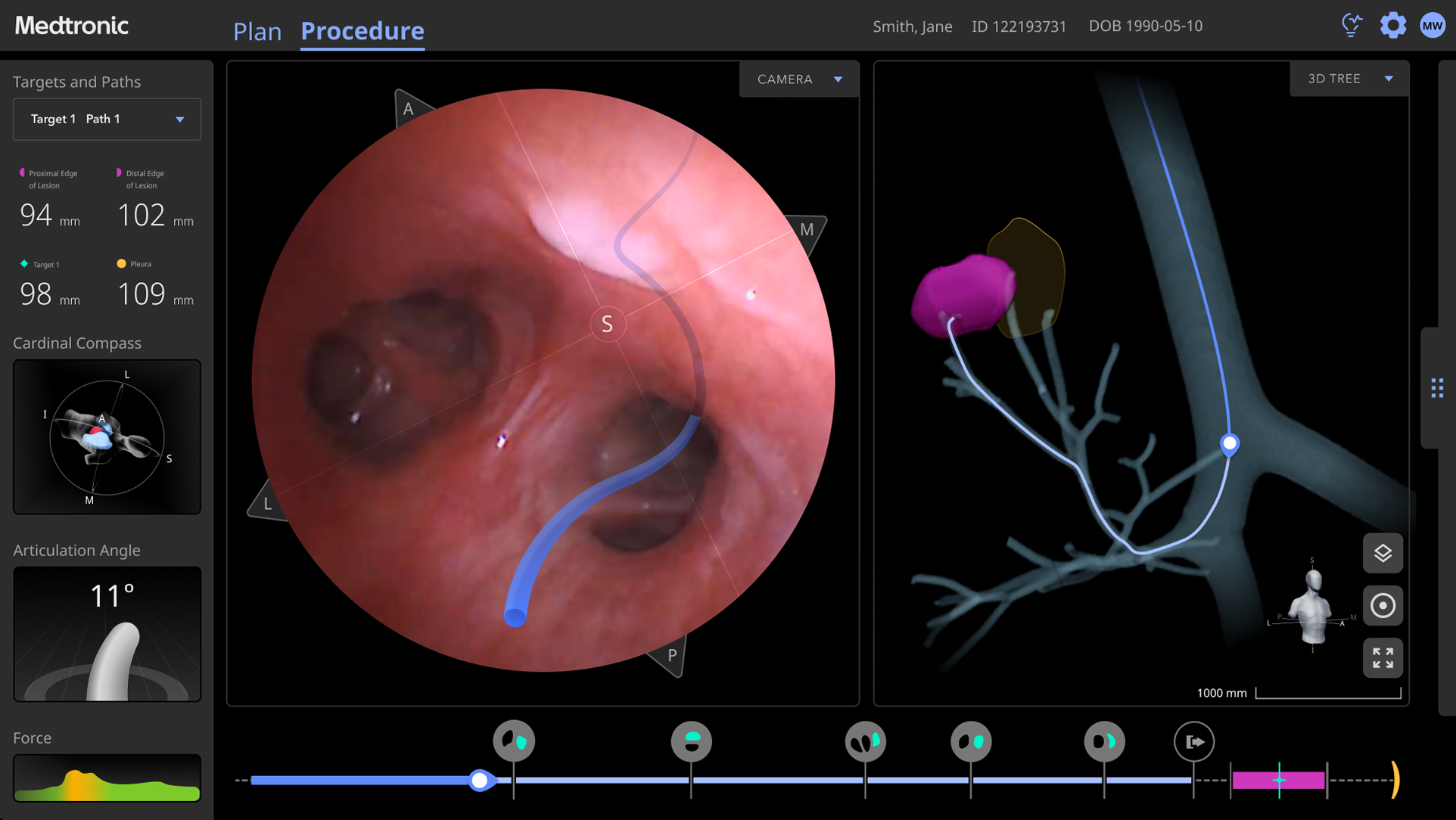
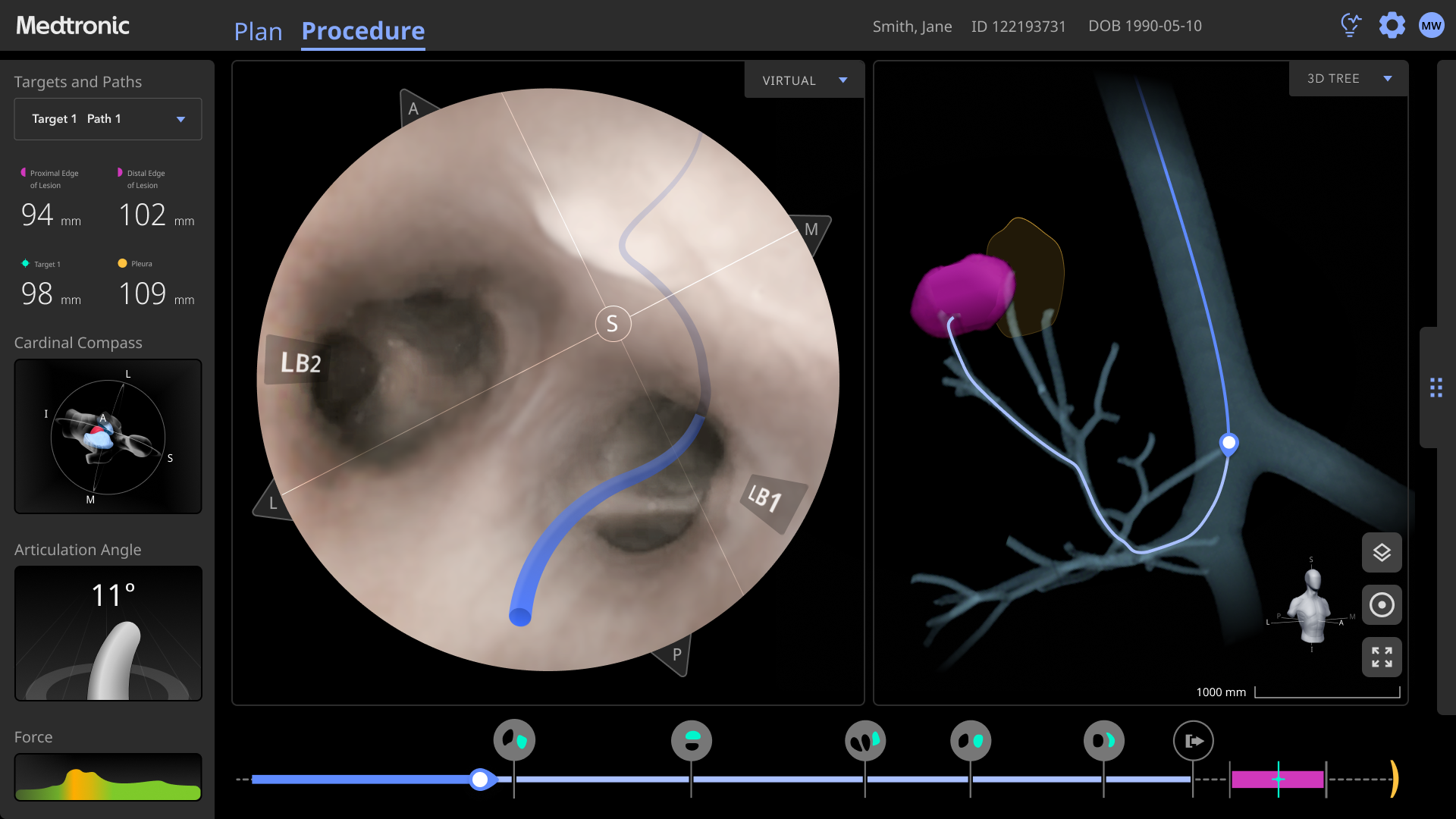
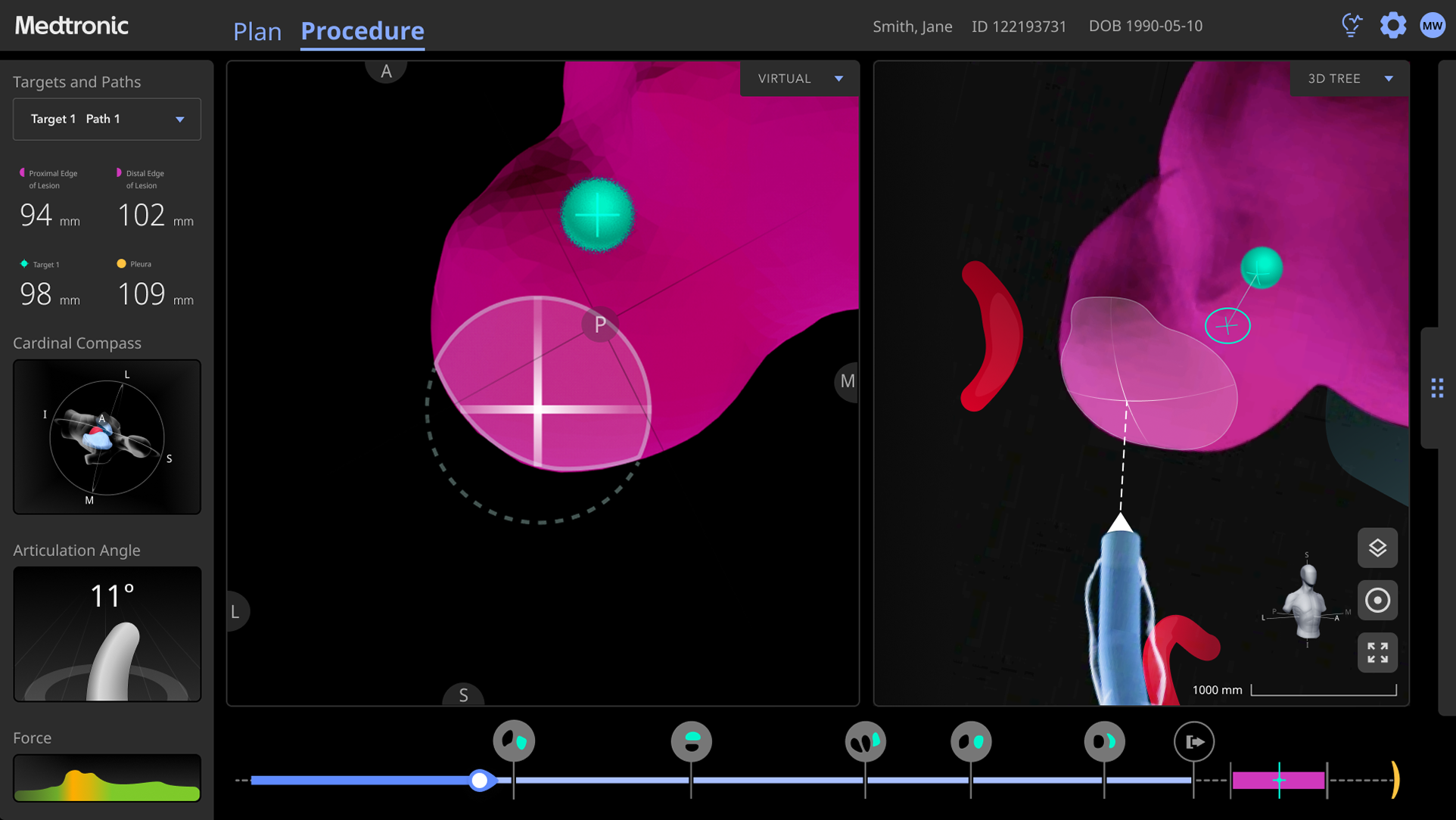
Development is ongoing
Two of Luna's six formative rounds ran on a fast, high-frequency cadence I created (named: Rapid GUI): a standing panel of 4–5 Key Opinion Leader surgeons met remotely two - three times a month across 12 sessions, each scoped to a single testable question — a task, a hierarchy decision, a feature, or an expectation. I built the artifacts and prototypes, set the learning objective for each session, and refined the script; an HF counterpart scheduled and ran the sessions while I observed and stepped in with follow-up questions when needed. Because the panel is small, consistent, and narrowly focused each time, this phase of the research does more than refine the design — it generates requirements that are shaping the strategy of the project.